
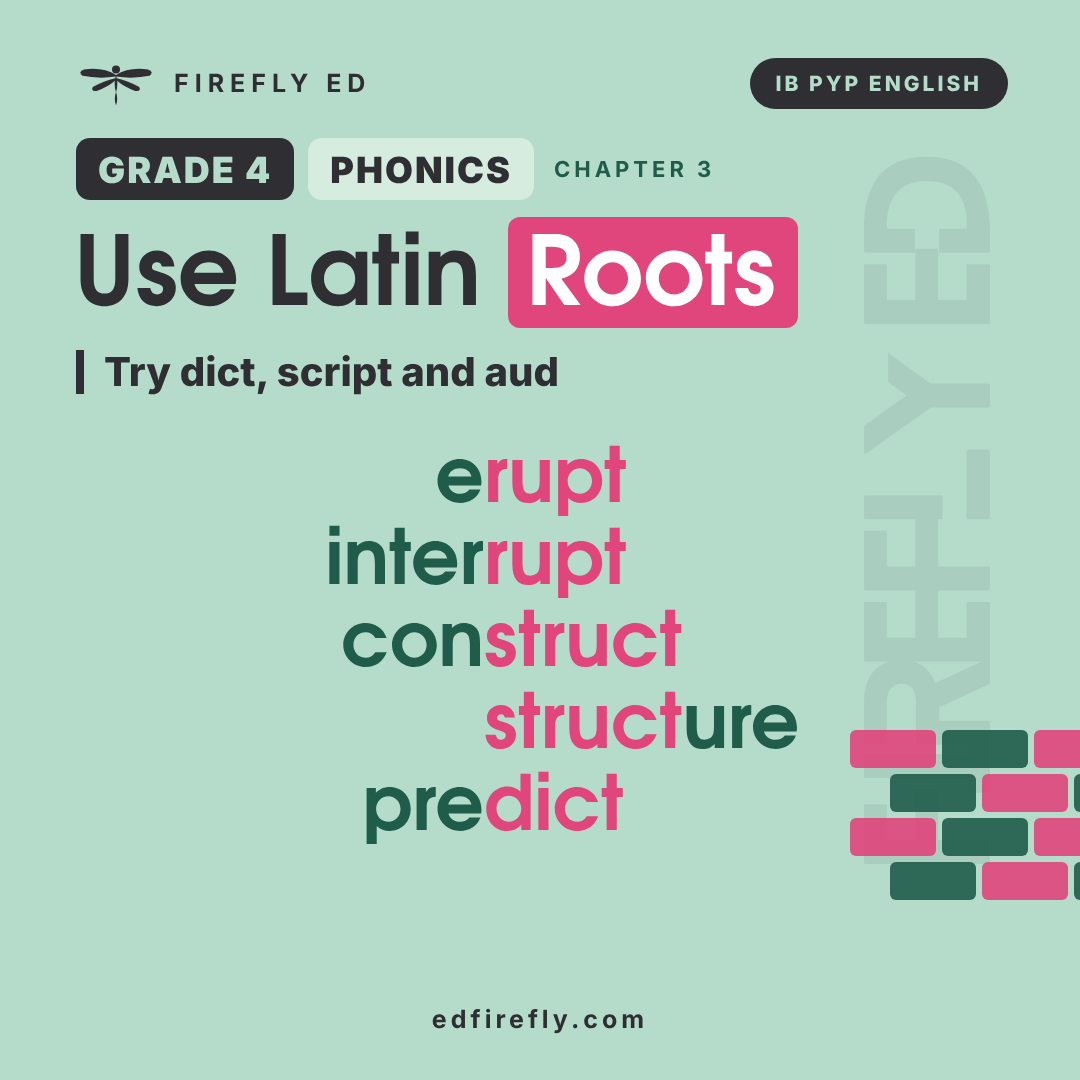
Term 1 | Level 1 | Phonics focus: Latin roots: dict, script, aud, vis, rupt and struct
Chapter 3 – Poems and Plays | Chapters – Index
Lessons
This page has the two reading lessons of Chapter 3, Poems and Plays: Lessons 3.1 and 3.2. The chapter page has the chapter overview, the chapter review and the PDF download.
Tap a lesson to open it. Tap the lesson title again, or use the link at the end of the lesson, to close it.
Lesson 3.1: Poems That Paint Pictures: Verse and Rhythm | Reading | About 20 minutes
Term 1 | Level 1
Goal
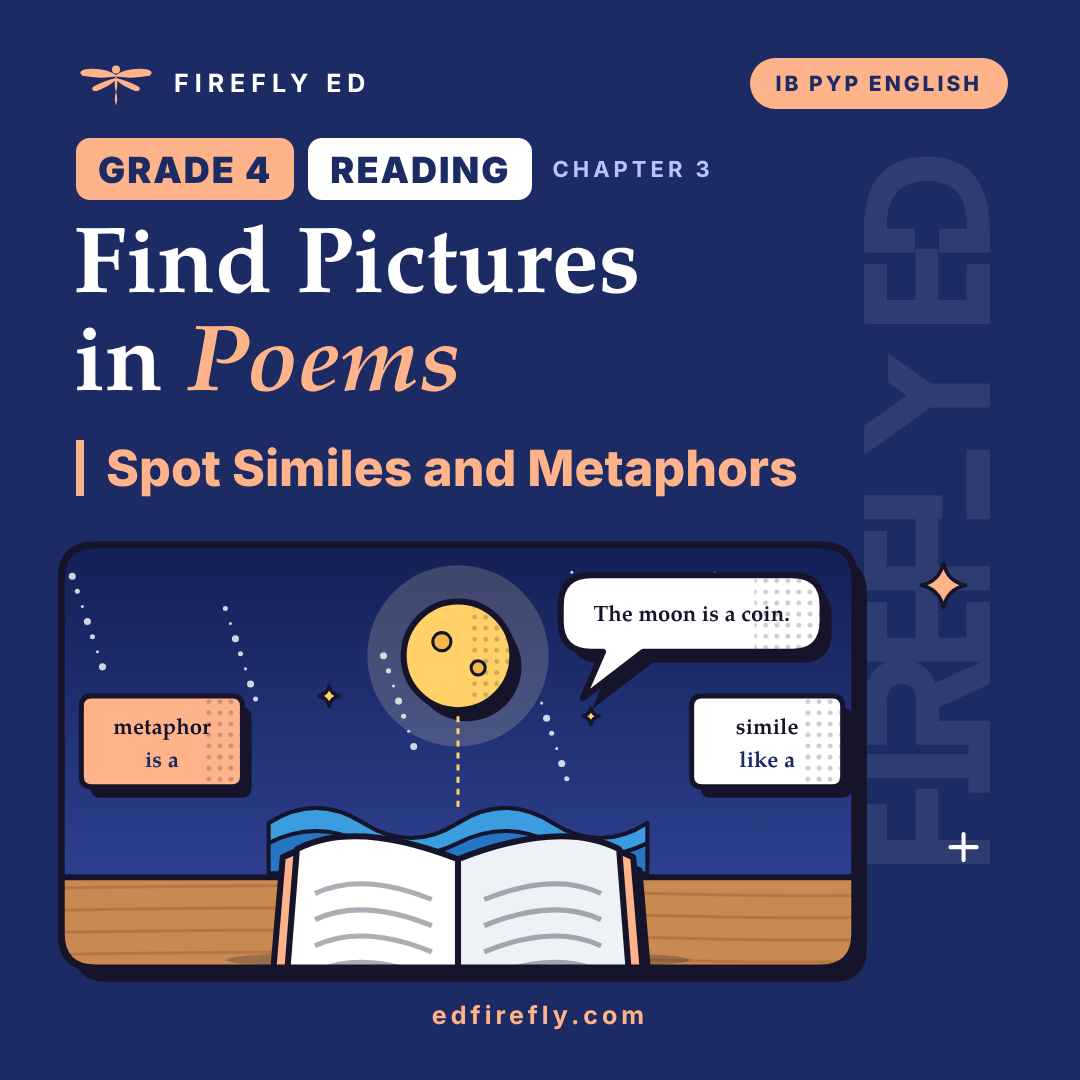
“I can name the parts of a poem, and explain what its similes and metaphors help me to picture.”
Words to know
poem, line, verse, rhyme, rhythm, simile, metaphor
Wonder
Think about this question before you start. Say your ideas. You will come back to it at the end of the lesson.
How can a poem help you see a picture in your head?
Let’s Learn
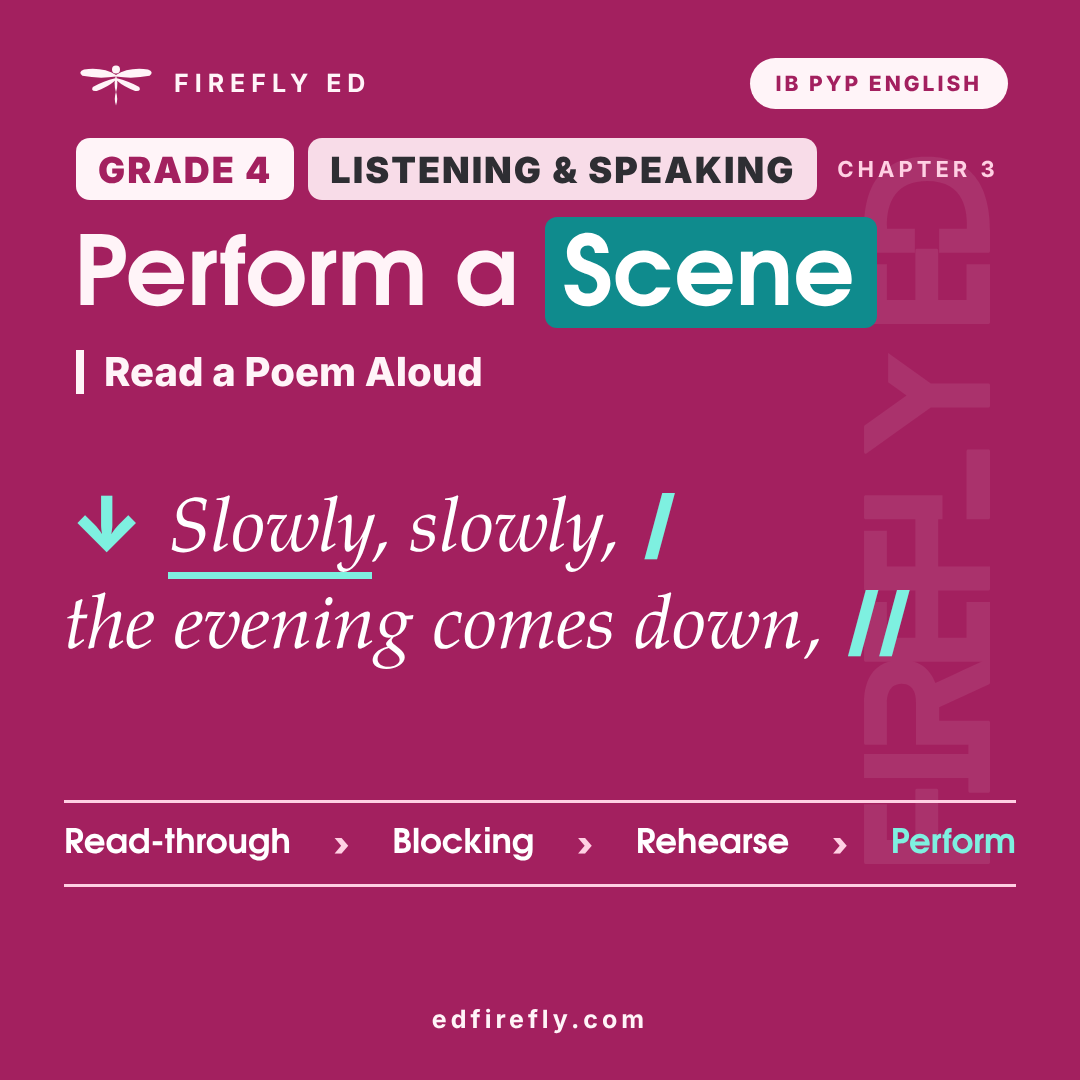
Listen as an adult reads the poem below aloud twice. Then read the rest of this part.
A poem uses few words to paint a picture and share a feeling. Poets choose every word carefully.
The Night Garden
A poem written for this lesson
The moon is a lantern that hangs on the hill,
The garden is sleeping, the pond lies still.
The roses fold up like umbrellas at night,
The fireflies flicker, small sparks of light.
A hedgehog goes shuffling, as slow as a clock,
It snuffles for beetles beneath the old rock.
The wind is a whisper that moves through the trees
And hushes the leaves with a soft, cool breeze.
Poets also compare things to help you picture them.
See How It’s Done
Now Try It
1. Find two rhyming words in the second verse.
______________ ______________
Hint: Look at the ends of the lines.
2. The wind is a whisper. Is this a simile or a metaphor? What does it tell you about the wind?
__________________________________________________________________
Hint: Does it use like or as? How loud is a whisper?
Time To Practise
Name: ______________________
1. Parts of the poem.
a) How many verses does “The Night Garden” have? ______
b) How many lines are in each verse? ______
c) Write two pairs of rhyming words.
______________ / ______________ ______________ / ______________
2. Simile or metaphor?
Write S or M.
______ The roses fold up like umbrellas at night.
______ The moon is a lantern.
______ A hedgehog goes shuffling, as slow as a clock.
______ The fireflies are small sparks of light.
______ The wind is a whisper.
3. What do you picture?
Choose one simile or metaphor. Write what it helps you picture, and why.
__________________________________________________________________
__________________________________________________________________
4. Tap the rhythm.
Say the first line aloud and tap the strong beats. How many strong beats are there?
______
5. The feeling.
How does the poem make you feel? Circle one word, then give a reason from the poem.
calm scared excited sad
Because __________________________________________________________
Reflect
Think about these questions. Talk about them with someone at home or at school.
1. Go back to the Wonder question: “How can a poem help you see a picture in your head?” What do you think now?
2. I was an inquirer today when I ______________________________.
An inquirer asks questions and finds things out. For example: I was an inquirer today when I found the similes and metaphors in the poem.
Take action: Look out of a window this evening. Say one simile and one metaphor about what you see.
Next Steps
If this was easy, try: Find a poem in a library or online. List its rhymes, and any similes or metaphors you find.
If this was hard, go back to: Let’s Learn. Read the first verse again, tap the beat, and point to each rhyming word.
Notes for Parents and Teachers
Show notes for parents and teachers
These notes cover this lesson only. How every lesson runs is explained in How to Use This Material.
Let’s Learn
Read the poem aloud twice before the rest of this part.
Answer Key
Reveal Answers
Now Try It
1. clock / rock, or trees / breeze 2. A metaphor. The wind is very soft and quiet.
1. Parts of the poem
a) 2 b) 4 c) Any two of: hill / still, night / light, clock / rock, trees / breeze
2. Simile or metaphor?
S, M, S, M, M
3. What do you picture?
Sample answer: “The roses fold up like umbrellas” makes me picture the petals closing tightly, like an umbrella that has been folded up after the rain.
4. Tap the rhythm
4 (The MOON is a LANtern that HANGS on the HILL)
5. The feeling
Sample answer: calm, because the garden is sleeping, the pond is still and the wind hushes the leaves.
Reflect
2. Any real moment from the lesson that shows the learner was an inquirer. Examples: “I was an inquirer today when I found the similes and metaphors in the poem.” “I was an inquirer today when I tapped the rhythm to hear the beat.”
Lesson 3.2: Poem, Play or Story? Three Texts, One Idea | Reading | About 20 minutes
Term 1 | Level 1
Goal
“I can explain how a story, a poem and a play are different, using words such as verse, cast and stage directions.”
Words to know
story, poem, play, verse, cast, setting, stage directions, dialogue
Wonder
Think about this question before you start. Say your ideas. You will come back to it at the end of the lesson.
How could the same idea be told as a story, a poem and a play?
Let’s Learn
Listen as an adult reads the three texts below aloud. Then read the rest of this part.
Writers can tell the same idea in different forms. Each form has its own structure. Read three texts about the same moment.
Text A: a story
Sam ran across the park with his new red kite. The wind tugged at the string, and the kite climbed higher and higher. “Look, Gran!” he shouted. Then a strong gust snatched the string out of his hand. The kite sailed away over the pond and caught in the branches of the tallest tree.
Sam’s face fell. Gran put her arm around him. “Let’s wait,” she said. “The wind took it, and the wind may give it back.” They sat on the bench and watched. After a while, the wind changed. The kite wriggled free, floated down like a red leaf and landed at Sam’s feet.
Text B: a poem
The Kite
Up goes my kite on the tug of the breeze,
Over the pond and the tops of the trees.
Snap goes the string, and away it flies,
A little red bird in the wide blue skies.
Caught in a branch, it shivers and shakes,
I sit with my gran for as long as it takes.
Then down comes the wind with a whispering sound
And lays my red kite at my feet on the ground.
Text C: a play scene
The Kite
Cast: SAM, a boy; GRAN, his grandmother
Setting: A windy park, with a tall tree and a bench.
(SAM runs across the stage, holding a kite string. GRAN follows slowly.)
SAM: Look, Gran! It’s flying higher than the tree!
GRAN: Hold on tight, Sam.
(A loud whoosh of wind. SAM opens his hands in surprise.)
SAM: (shouting) No! It’s gone!
(SAM points up at the tree. He looks sad.)
GRAN: (putting an arm around him) Let’s wait. The wind took it, and the wind may give it back.
(They sit on the bench. A pause. The kite floats down and lands at SAM’s feet.)
SAM: (jumping up) It came back!
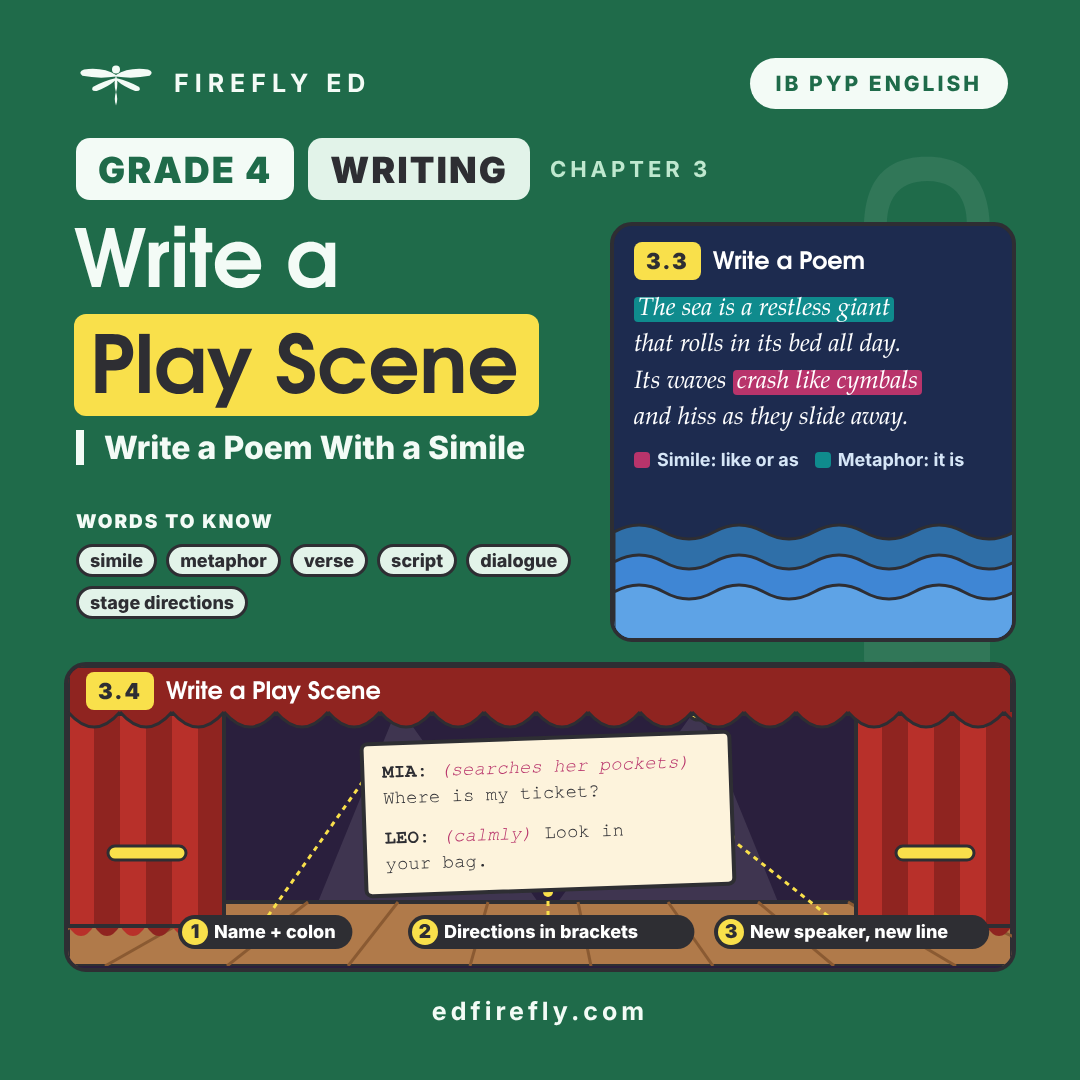
Stage directions tell the actors what to do and how to speak. They are written in brackets and often in italics. They are not read aloud.
See How It’s Done
Now Try It
1. In the play, how do we know that Sam is sad when the kite flies away?
__________________________________________________________________
Hint: Look at the stage directions.
2. Find a simile in the story (Text A).
__________________________________________________________________
Hint: Look for the word like.
Time To Practise
Name: ______________________
1. Which form?
Write story, poem or play.
a) It has a cast list. ______________
b) It is written in verses. ______________
c) It uses quotation marks for speech. ______________
d) It has stage directions. ______________
e) It uses rhyme. ______________
2. Find the parts.
Find and copy one example of each from the texts.
a stage direction: ____________________________________________________
two rhyming words: ____________________________________________________
a line of dialogue from the play: _________________________________________
3. Compare.
What does the poem tell you about how Sam feels that the story does not? Or what does the story tell you that the poem does not? Write one sentence.
__________________________________________________________________
4. Change the form.
Turn these two lines of the story into two lines of a play, with a stage direction.
“Let’s wait,” she said. Then they sat on the bench.
__________________________________________________________________
__________________________________________________________________
5. Your choice.
Which text did you enjoy most? Give one reason that names a feature of that form.
__________________________________________________________________
Reflect
Think about these questions. Talk about them with someone at home or at school.
1. Go back to the Wonder question: “How could the same idea be told as a story, a poem and a play?” What do you think now?
2. I was open-minded today when I ______________________________.
Being open-minded means listening to other ideas and other ways of doing things. For example: I was open-minded today when I compared three ways to tell the same idea.
Take action: Find a story you know well. Tell part of it to someone at home as a short play, using two voices.
Next Steps
If this was easy, try: Write the same moment as a four-line poem from the kite’s point of view.
If this was hard, go back to: Let’s Learn. Look at the comparison table, then point to one example of each special part in the three texts.
Notes for Parents and Teachers
Show notes for parents and teachers
These notes cover this lesson only. How every lesson runs is explained in How to Use This Material.
Let’s Learn
Read the three texts aloud before the rest of this part.
Answer Key
Reveal Answers
Now Try It
1. The stage direction says “He looks sad”, and he shouts “No! It’s gone!” 2. The kite floated down like a red leaf.
1. Which form?
a) play b) poem c) story d) play e) poem
2. Find the parts
Examples: (SAM points up at the tree. He looks sad.); breeze / trees, flies / skies, shakes / takes, sound / ground; SAM: It came back!
3. Compare
Sample answer: The story tells us that Gran said the wind may give the kite back, but the poem does not use her words.
4. Change the form
Sample answer: GRAN: Let’s wait. (They sit down on the bench.)
5. Your choice
Any form with a reason that names a feature, for example: I liked the poem best because the rhymes and the rhythm made it fun to read aloud.
Reflect
2. Any real moment from the lesson that shows the learner was open-minded. Examples: “I was open-minded today when I compared three ways to tell the same idea.” “I was open-minded today when I saw what each form does well.”
For Teachers: IB Details
Show IB and curriculum details
IB theme: How we express ourselves. This theme is about the ways in which we discover and express ideas, feelings, beliefs and values, and how we enjoy and share stories, poems, plays and art.
Central idea: Poets and playwrights choose words, rhythm and structure to share feelings and ideas.
| Lesson | Title | Strand | Key concept |
|---|---|---|---|
| 3.1 | Poems That Paint Pictures: Verse and Rhythm | Reading | Form |
| 3.2 | Poem, Play or Story? Three Texts, One Idea | Reading | Form |
Each lesson also matches the national curriculum for England (Year 4) and the US Common Core (Grade 4). The Grade 4 Curriculum Map lists the full standards for every lesson.
← Back to Chapter 3 – Poems and Plays | Chapters – Index
© 2026 Firefly Ed. All rights reserved. This page may be printed for personal, home and classroom use. It may not be sold, shared online or reproduced for commercial use without written permission. edfirefly.com

Share your thoughts or ask something..