
Term 3 | Level 3 | Phonics focus: homophones, words that are often mixed up, and silent letters
Chapter 9 – Protecting Wildlife | Chapters – Index
Lessons
This page has the two writing lessons of Chapter 9, Protecting Wildlife: Lessons 9.3 and 9.4. The chapter page has the chapter overview, the chapter review and the PDF download.
Tap a lesson to open it. Tap the lesson title again, or use the link at the end of the lesson, to close it.
Lesson 9.3: Research and Take Notes: Choose an Endangered Animal | Writing | About 20 minutes
Term 3 | Level 3
Goal
“I can take notes from two sources, sort them under headings and list my sources.”
Words to know
research, notes, key words, heading, source, sort
Wonder
Think about this question before you start. Say your ideas. You will come back to it at the end of the lesson.
How do you remember the important facts when you read?
Let’s Learn
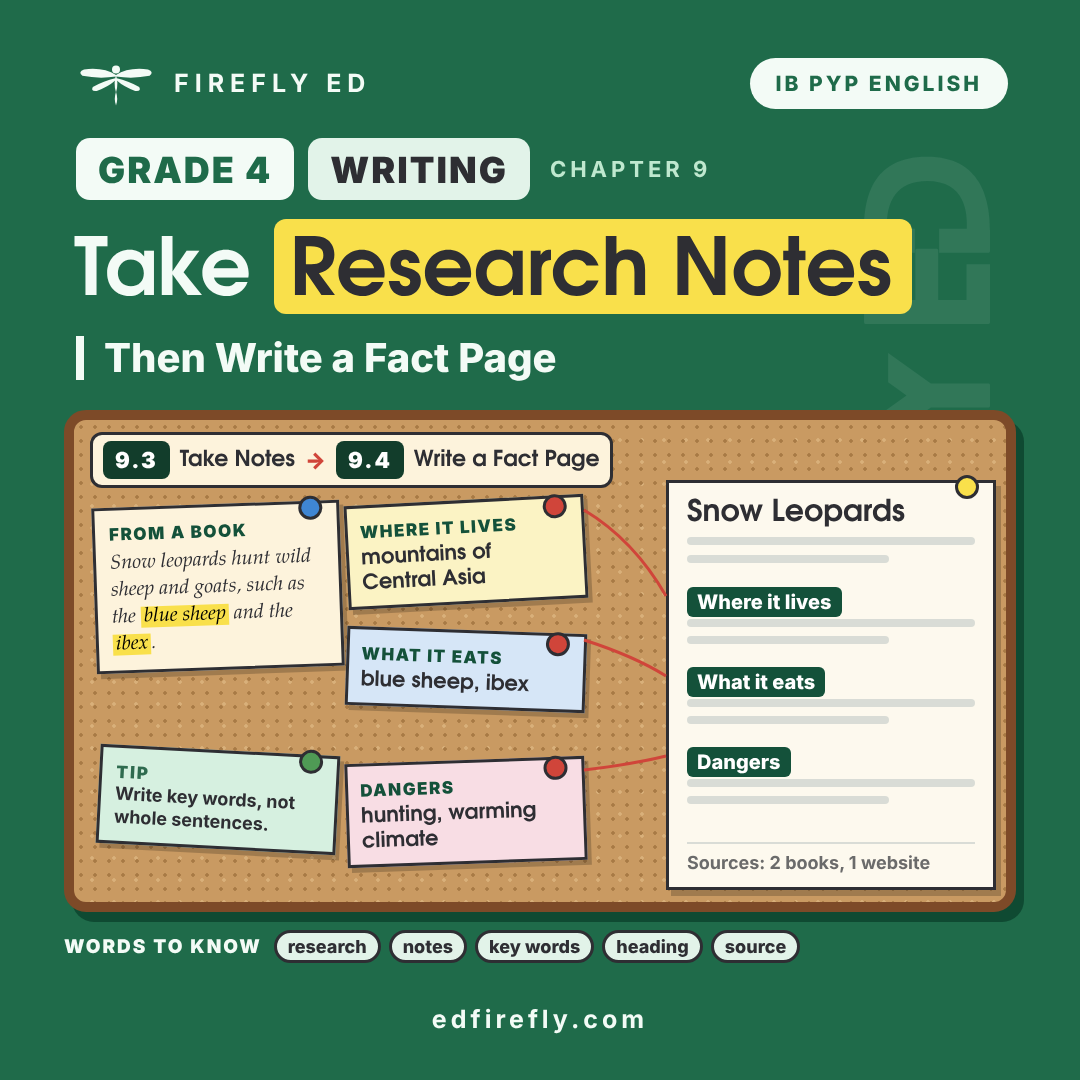
When we research, we find facts in different places, called sources. We write notes: short key words, not whole sentences, so we use our own words later. Then we sort the notes under headings, and we write down each source so others can check our facts.
Fact Sheet A: The Snow Leopard
From a wildlife charity’s website
Snow leopards live high in the mountains of Central and South Asia, in 12 countries including China, India, Mongolia and Nepal. They are often called the “ghosts of the mountains” because they are so hard to see.
Their thick, smoky-grey fur with dark rosettes keeps them warm and hides them among the rocks. Their wide, furry paws work like snowshoes. Their long, thick tail helps them balance on steep slopes, and they wrap it around their face to keep warm while they sleep.
Snow leopards hunt wild sheep and goats, such as the blue sheep and the ibex. They can leap up to about six times the length of their own body.
Fact Sheet B: Snow Leopards in Danger
From a children’s science magazine
Snow leopards are listed as vulnerable, which means they face a high risk of dying out in the wild. Nobody knows exactly how many there are, because they live in remote mountains and are hard to find.
They face several threats. Some are hunted illegally for their fur. When wild prey becomes scarce, snow leopards sometimes kill farmers’ sheep and goats, and the farmers may kill them in return. As the climate warms, the tree line moves higher up the mountains, which may shrink the open, rocky land the cats need.
Conservation groups help farmers build strong, leopard-proof pens for their animals at night. Some villages earn money from visitors who come to see snow leopards. Camera traps help scientists count them.
See How It’s Done
Now Try It
1. Turn this into a note: Snow leopards hunt wild sheep and goats, such as the blue sheep and the ibex. ______________________________
2. Which heading would it go under? ______________
Time To Practise
Name: ______________________
1. Ask your questions.
Write two questions you want to answer about snow leopards.
__________________________________________________________________
2. Take notes.
Write notes from both fact sheets under these headings. Add (A) or (B) after each note.
| Where it lives | What it looks like | What it eats | Dangers | Help |
|---|---|---|---|---|
| |
3. List your sources.
Source A: ______________________________ Source B: ______________________________
4. Choose your own animal.
Choose an endangered animal to research next, such as the orangutan, the African forest elephant or the hawksbill turtle. With an adult, find two trusted sources and take notes under the same headings.
Animal: ______________ Source 1: ______________________ Source 2: ______________________
Reflect
Think about these questions. Talk about them with someone at home or at school.
1. Go back to the Wonder question: “How do you remember the important facts when you read?” What do you think now?
2. I was an inquirer today when I ______________________________.
An inquirer asks questions and finds things out. For example: I was an inquirer today when I wrote notes in key words.
Take action: Visit a library with an adult and find one book about your chosen animal.
Next Steps
If this was easy, try: Add a third source, and mark any fact that two sources disagree about.
If this was hard, go back to: Let’s Learn. Read one paragraph at a time. Underline three key words, then write them as a note.
Notes for Parents and Teachers
Show notes for parents and teachers
These notes cover this lesson only. How every lesson runs is explained in How to Use This Material.
Let’s Learn
Read Let’s Learn aloud together. Read the two fact sheets together.
Answer Key
Reveal Answers
Now Try It
1. Sample note: hunts wild sheep, goats (blue sheep, ibex) 2. What it eats
1. Answers will vary.
2. Sample notes: Where: mountains, Central and South Asia, 12 countries (A). Looks: smoky-grey fur, rosettes; wide paws; long tail (A). Eats: blue sheep, ibex (A). Dangers: hunted for fur; killed by farmers; climate change shrinking habitat (B). Help: leopard-proof pens; visitors bring money; camera traps (B).
3. A: a wildlife charity’s website. B: a children’s science magazine.
4. Look for: two trusted sources and notes in key words under each heading.
Reflect
2. Any real moment from the lesson that shows the learner was an inquirer. Examples: “I was an inquirer today when I wrote notes in key words.” “I was an inquirer today when I recorded where each fact came from.”
Lesson 9.4: Write a Fact Page From Your Notes | Writing | About 20 minutes
Term 3 | Level 3
Goal
“I can turn my notes into a fact page with an introduction, headings, linking words, a conclusion and a list of sources.”
Words to know
fact page, introduction, heading, paragraph, conclusion, source
Wonder
Think about this question before you start. Say your ideas. You will come back to it at the end of the lesson.
How can notes in key words become clear sentences?
Let’s Learn
A fact page shares what you found out. It has a title and an introduction, then a heading for each group of notes, with a paragraph under each. Linking words join the facts. It ends with a conclusion and a list of sources.
The Snow Leopard: Ghost of the Mountains
The snow leopard is a big cat that lives in some of the highest, coldest places on Earth. It is so hard to see that people call it the “ghost of the mountains”. Sadly, it is now at risk of dying out in the wild.
Where it lives
Snow leopards live high in the mountains of 12 countries in Central and South Asia, including China, India, Mongolia and Nepal. They prefer steep, rocky slopes.
Built for the cold
The snow leopard’s body is perfect for its home. For example, its thick, smoky-grey fur keeps it warm and hides it among the rocks. Its wide, furry paws work like snowshoes. In addition, its long tail helps it balance, and it wraps the tail around its face to keep warm.
Dangers
Snow leopards face several threats. Some are hunted for their fur. Also, when wild prey is scarce, they may kill farmers’ animals, and farmers may kill them in return. Because the climate is warming, the open, rocky land they need may shrink.
How people help
People are working to protect them. Farmers build leopard-proof pens, villages earn money from visitors, and scientists count the cats with camera traps.
Conclusion
The snow leopard is perfectly built for life in the mountains, but it needs our help to survive. If people and snow leopards can learn to share the mountains, this ghost will not disappear.
Sources: a wildlife charity’s website; a children’s science magazine.
See How It’s Done
Now Try It
1. Find three linking words in the model. ______________ ______________ ______________
2. What does the conclusion do? ______________________________
Time To Practise
Name: ______________________
1. Notes to sentences.
Turn each note into a full sentence.
a) eats: blue sheep, ibex ______________________________
b) camera traps: count cats ______________________________
2. Plan your fact page.
Use your notes from Lesson 9.3 on your chosen animal.
Title: ______________________________ Headings: ______________ ______________ ______________ ______________
3. Write your fact page.
On paper, write your fact page with an introduction, a paragraph under each heading, linking words, a conclusion and your sources. Add a picture or diagram with a caption.
4. Check it.
Tick each one: ☐ title ☐ introduction ☐ headings ☐ facts in my own words ☐ linking words ☐ conclusion ☐ sources
Reflect
Think about these questions. Talk about them with someone at home or at school.
1. Go back to the Wonder question: “How can notes in key words become clear sentences?” What do you think now?
2. I was a communicator today when I ______________________________.
A communicator shares ideas clearly by talking, writing or drawing. For example: I was a communicator today when I turned notes into clear sentences.
Take action: Share your fact page with your family or post it on a noticeboard at school or at home.
Next Steps
If this was easy, try: Add a short section called “Did you know?” with three surprising facts.
If this was hard, go back to: Let’s Learn. Use the model fact page as a frame. Keep the headings and change the facts.
Notes for Parents and Teachers
Show notes for parents and teachers
These notes cover this lesson only. How every lesson runs is explained in How to Use This Material.
Let’s Learn
Read Let’s Learn aloud together. Read the model fact page together.
Answer Key
Reveal Answers
Now Try It
1. Any three of: for example, in addition, also, because, if. 2. It sums up the main idea and ends with a hopeful thought about the future.
1. Sample answers: a) Snow leopards eat wild animals such as blue sheep and ibex. b) Scientists use camera traps to count snow leopards.
2 to 4. Look for: a clear title, an introduction, three or four headings with a paragraph each, facts in the learner’s own words, linking words, a conclusion and a list of sources.
Reflect
2. Any real moment from the lesson that shows the learner was a communicator. Examples: “I was a communicator today when I turned notes into clear sentences.” “I was a communicator today when I organised facts under headings.”
For Teachers: IB Details
Show IB and curriculum details
IB theme: Sharing the planet. This theme is about the rights and responsibilities we have as we share the planet’s resources with other people and other living things.
Central idea: Human actions put many animals in danger, and people around the world work to protect them.
| Lesson | Title | Strand | Key concept |
|---|---|---|---|
| 9.3 | Research and Take Notes: Choose an Endangered Animal | Writing | Connection |
| 9.4 | Write a Fact Page From Your Notes | Writing | Connection |
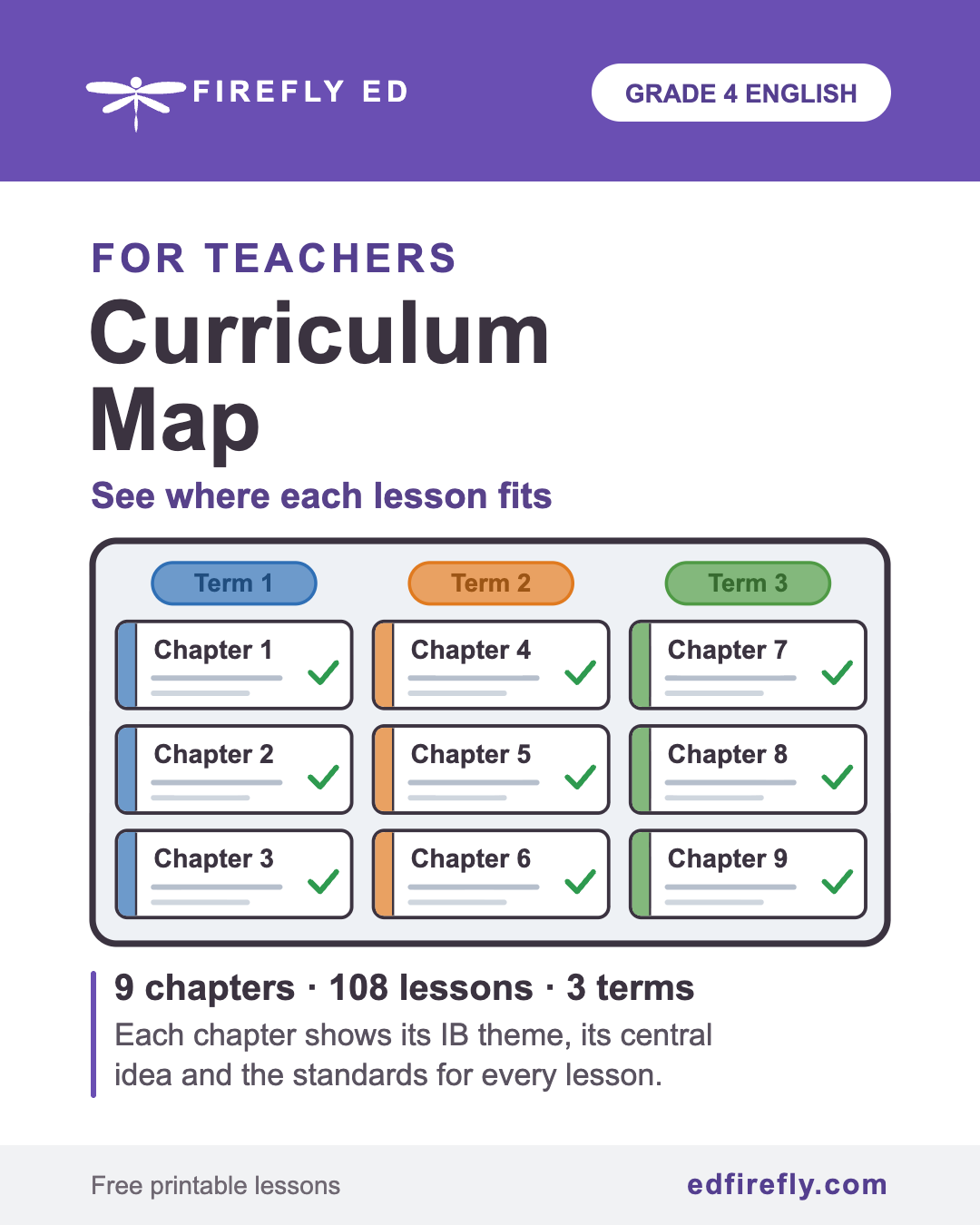
Each lesson also matches the national curriculum for England (Year 4) and the US Common Core (Grade 4). The Grade 4 Curriculum Map lists the full standards for every lesson.
← Back to Chapter 9 – Protecting Wildlife | Chapters – Index
© 2026 Firefly Ed. All rights reserved. This page may be printed for personal, home and classroom use. It may not be sold, shared online or reproduced for commercial use without written permission. edfirefly.com

Share your thoughts or ask something..