
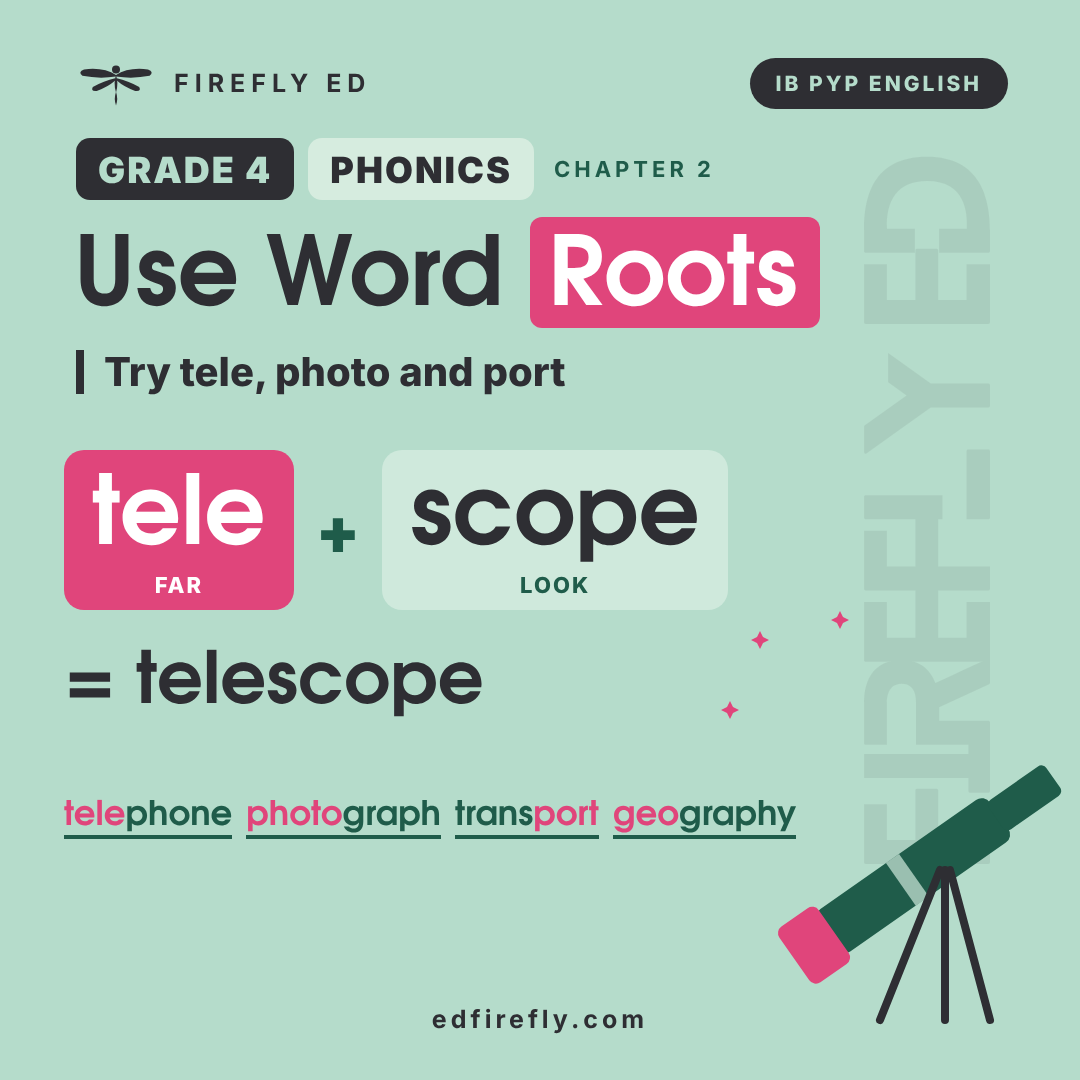
Term 1 | Level 1 | Phonics focus: Greek and Latin roots: tele, photo, graph, port, nav, geo and meter
Chapter 2 – Explorers and Voyages | Chapters – Index
Lessons
This page has the two reading lessons of Chapter 2, Explorers and Voyages: Lessons 2.1 and 2.2. The chapter page has the chapter overview, the chapter review and the PDF download.
Tap a lesson to open it. Tap the lesson title again, or use the link at the end of the lesson, to close it.
Lesson 2.1: Sailing by the Stars: Polynesian Wayfinders | Reading | About 20 minutes
Term 1 | Level 1
Goal
“I can find key information in a text and put the events of a voyage in time order.”
Words to know
wayfinding, navigator, voyage, horizon, swell, voyaging canoe
Wonder
Think about this question before you start. Say your ideas. You will come back to it at the end of the lesson.
How could you find your way across the ocean with no map, no compass and no phone?
Let’s Learn
An information text about a real event often tells what happened in time order. Clue words and dates show the order: first, then, after, later, near the end, finally, on 1 May.
When you read, look for key information: who, what, where, when and how. Underline it, then write it down in a short note or a table.
Word bank: wayfinding (finding the way by reading nature), navigator (the person who guides a boat), swell (a long wave from far away), horizon (the line where the sea meets the sky), hull (the body of a boat)
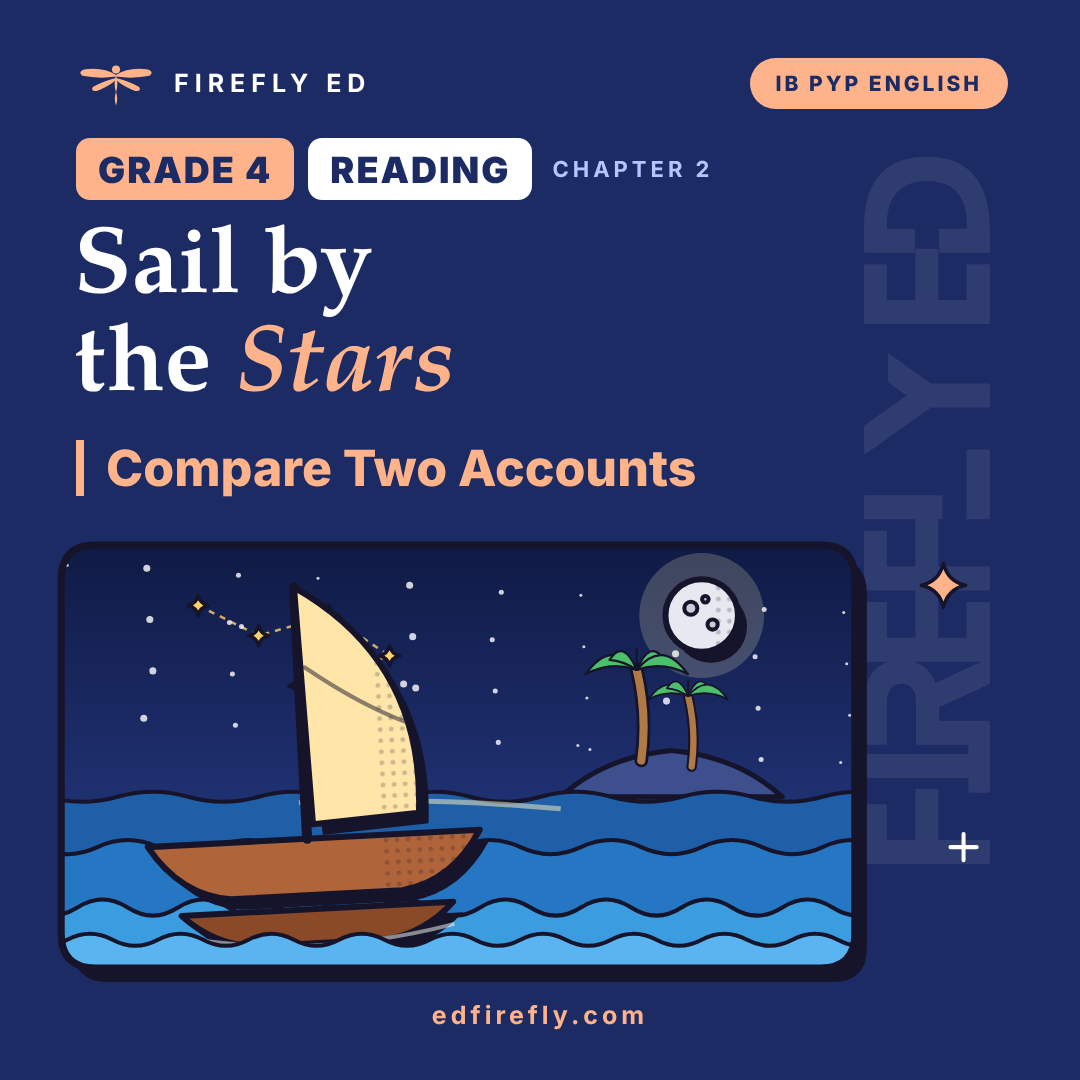
Sailing by the Stars
Long before compasses and printed maps, people sailed across the Pacific Ocean, the largest ocean on Earth. Polynesian sailors reached islands spread over a huge area, from Hawaiʻi in the north to Aotearoa (New Zealand) in the south and Rapa Nui (Easter Island) in the east. They found their way by reading nature. This skill is called wayfinding.
How wayfinders find their way
A wayfinder watches the sky. Each star rises at the same point on the horizon every night, and sets at the same point. A wayfinder learns where many stars rise and set, and uses them like a compass. During the day, the wayfinder uses the sun.
The ocean helps too. Swells are long waves that roll across the sea from far away. A wayfinder can feel the pattern of the swells moving the canoe, even at night.
Birds give clues as land comes closer. Some seabirds fly out to sea in the morning to fish, and fly back to land in the evening. Following them can lead a canoe to an island. Wayfinders also keep the whole journey in their heads. They remember how far they have come and in which direction.
A canoe called Hōkūleʻa
In the 1970s, some people believed that the early Polynesians could not have crossed the ocean on purpose. A group in Hawaiʻi decided to test the idea. They built a voyaging canoe called Hōkūleʻa (say: ho-koo-LAY-ah). It had two hulls joined by a deck, and two sails.
Very few people still knew the old ways of wayfinding. So the crew asked Mau Piailug for help. Mau was a master navigator from Satawal, a small island in Micronesia. He was one of the few people who could still cross the open ocean by the stars.
The voyage to Tahiti
On 1 May 1976, Hōkūleʻa left Maui, one of the islands of Hawaiʻi. The crew sailed south across the open ocean with no compass and no charts. Mau watched the stars at night and the sun by day. When clouds hid the sky, he steered by the swells and kept the journey in his head.
Near the end of the voyage, the crew saw small white birds skimming the sea. Mau knew that land was close. On 1 June, they sighted a small island in the Tuamotu group. Three days later, on 4 June 1976, Hōkūleʻa arrived in Tahiti, 34 days after leaving Maui. A large crowd came to the shore to welcome the canoe.
Why the voyage mattered
The voyage showed that people could cross thousands of kilometres of ocean using only their knowledge of nature. It helped many Hawaiians feel proud of their history. It also brought wayfinding back to life. Mau went on to teach Hawaiian navigators, and new wayfinders are still learning the skills today.
See How It’s Done
Now Try It
1. Find two clues that Mau used when clouds hid the stars.
__________________________________________________________________
Hint: Look in the section called “The voyage to Tahiti”.
2. Which words tell you that the birds came before the island was sighted?
__________________________________________________________________
Hint: Look for time words in the same paragraph.
Time To Practise
Name: ______________________
1. Words in the text.
Match each word to its meaning. Draw a line.
wayfinding a long wave that rolls from far away
swell the line where the sea meets the sky
horizon finding the way by reading nature
navigator the person who guides a boat
2. Put the events in order.
Number the events from 1 to 6.
______ The crew saw small white birds.
______ A group in Hawaiʻi built Hōkūleʻa.
______ Hōkūleʻa arrived in Tahiti.
______ The crew asked Mau Piailug for help.
______ Hōkūleʻa left Maui on 1 May 1976.
______ The crew sighted an island in the Tuamotus.
3. Find the answer.
a) Why did the group in Hawaiʻi build Hōkūleʻa?
__________________________________________________________________
b) Why did the crew ask Mau Piailug for help?
__________________________________________________________________
c) How did the birds help Mau?
__________________________________________________________________
4. Record the key information.
| Question | Answer from the text |
|---|---|
| Who was the navigator? | |
| Where was he from? | |
| When did the voyage start? | |
| Where did it end? | |
| How many days did it take? |
5. The main idea.
Read the section “Why the voyage mattered”. Write its main idea in one sentence.
Sentence starter: The voyage mattered because …
__________________________________________________________________
__________________________________________________________________
Reflect
Think about these questions. Talk about them with someone at home or at school.
1. Go back to the Wonder question: “How could you find your way across the ocean with no map, no compass and no phone?” What do you think now?
2. I was knowledgeable today when I ______________________________.
Being knowledgeable means knowing things and using what you know. For example: I was knowledgeable today when I found the key facts about the voyage.
Take action: Go outside on a clear evening with an adult. Find one bright star or the Moon. Notice where it is in the sky, then look again an hour later.
Next Steps
If this was easy, try: Find out how many days a modern ship takes to sail from Hawaiʻi to Tahiti. Compare it with Hōkūleʻa’s 34 days.
If this was hard, go back to: Let’s Learn. Read the section “The voyage to Tahiti” again, and underline every date and time word before you do Task 2.
Notes for Parents and Teachers
Show notes for parents and teachers
These notes cover this lesson only. How every lesson runs is explained in How to Use This Material.
Let’s Learn
Then read the text together.
Answer Key
Reveal Answers
Now Try It
1. He steered by the swells, and he kept the journey in his head.
2. “Near the end of the voyage” comes before “On 1 June”, and the text says the birds told Mau that land was close.
1. Words in the text
wayfinding: finding the way by reading nature; swell: a long wave that rolls from far away; horizon: the line where the sea meets the sky; navigator: the person who guides a boat.
2. Put the events in order
4, 1, 6, 2, 3, 5 (built Hōkūleʻa 1, asked Mau 2, left Maui 3, birds 4, island 5, Tahiti 6)
3. Find the answer
a) To test whether the early Polynesians could have crossed the ocean on purpose.
b) Very few people still knew wayfinding, and Mau was a master navigator who could cross the ocean by the stars.
c) Small white birds skimming the sea told him that land was close.
4. Record the key information
Mau Piailug; Satawal, a small island in Micronesia; 1 May 1976, from Maui; Tahiti; 34 days.
5. The main idea
Sample answer: The voyage mattered because it showed that people could cross the ocean using their knowledge of nature, and it brought wayfinding back to life.
Look for: a sentence that covers the whole section, not just one detail.
Reflect
2. Any real moment from the lesson that shows the learner was knowledgeable. Examples: “I was knowledgeable today when I found the key facts about the voyage.” “I was knowledgeable today when I put the events of the voyage in time order.”
Lesson 2.2: Two Accounts of One Voyage: Firsthand and Secondhand | Reading | About 20 minutes
Term 1 | Level 1
Goal
“I can tell a firsthand account from a secondhand account and say what each one tells me.”
Words to know
account, firsthand, secondhand, focus, fact, feeling
Wonder
Think about this question before you start. Say your ideas. You will come back to it at the end of the lesson.
If you want to know what a voyage felt like, who should you ask?
Let’s Learn
An account tells about an event. A firsthand account is written by someone who was there. A secondhand account is written by someone who was not there. They found out from other people, or from what they read.
The two accounts below are about the same voyage. (For the adult: The voyage and the people in these accounts are invented for this lesson. The way the crew finds the island is real.)
Account A: Leilani’s diary
Day 3. I woke at dawn with salt on my lips. The sea had changed in the night. The swells were bigger, and the canoe rose and fell like a slow breath. Our navigator, Uncle Kaleo, stood at the back of the canoe. He had not slept.
“The swells come from the east now,” he told me. “Feel them under your feet.” I closed my eyes, and I could feel them.
By noon my arms ached from pulling ropes. We ate dried fish and sweet potato. In the afternoon a frigate bird circled above us, and everyone cheered. Uncle Kaleo just smiled. “Not yet,” he said. “That bird can fly a long way.”
At sunset I felt nervous. What if we missed the island? Then, just before dark, I saw a thin grey line on the horizon. Land! I will never forget the sound of the whole crew shouting.
Account B: a report in the island newsletter
Training canoe completes first ocean voyage
The voyaging canoe Manu Iti arrived at Pua Island on Thursday evening after a three-day voyage of about 300 kilometres. The crew of twelve sailed without a compass or a satellite map. They were led by the navigator Kaleo Mahoe, who has trained young wayfinders for many years.
A support boat followed the canoe for safety. According to the crew, the navigator used the stars, the swells and seabirds to find the island. This was the first long voyage for six of the young crew members.
The canoe will sail home next month.
See How It’s Done
Now Try It
1. Find one sentence in Account A that tells you what the writer could hear.
__________________________________________________________________
Hint: Look at the last paragraph.
2. Find one fact in Account B that is not in Account A.
__________________________________________________________________
Hint: Look for a number.
Time To Practise
Name: ______________________
1. Which account?
Write A or B.
______ It tells us how far the canoe sailed.
______ It tells us the writer felt nervous.
______ It tells us that a support boat followed the canoe.
______ It tells us what the crew ate.
______ It tells us the navigator’s full name.
2. Find the details.
a) Write two feelings or senses from Account A.
1. ______________________________ 2. ______________________________
b) Write two numbers from Account B and what they tell us.
1. __________________________________________________________________
2. __________________________________________________________________
3. Clue words.
Write two clue words from each account that show who is telling it.
Account A: ______________ ______________ Account B: ______________ ______________
4. Which account would help you more?
a) You want to know how many people were in the crew. ______
b) You want to know what it felt like to see land. ______
c) Explain your answer to b).
__________________________________________________________________
5. Compare.
Write two sentences that compare the accounts.
Sentence starters: Account A focuses on … Account B focuses on … Both accounts …
__________________________________________________________________
__________________________________________________________________
Reflect
Think about these questions. Talk about them with someone at home or at school.
1. Go back to the Wonder question: “If you want to know what a voyage felt like, who should you ask?” What do you think now?
2. I was open-minded today when I ______________________________.
Being open-minded means listening to other ideas and other ways of doing things. For example: I was open-minded today when I looked at the voyage from two points of view.
Take action: Ask an older family member to tell you about a journey they remember. Then find a secondhand account of the same place, such as a guidebook page or a website, and compare them.
Next Steps
If this was easy, try: Write a short secondhand account of something that happened at home this week. Then ask the person it happened to for their firsthand account.
If this was hard, go back to: Let’s Learn. Look at the comparison table again, then reread Account A and underline every I, my and we.
Notes for Parents and Teachers
Show notes for parents and teachers
These notes cover this lesson only. How every lesson runs is explained in How to Use This Material.
Let’s Learn
Then read the two accounts together.
Answer Key
Reveal Answers
Now Try It
1. “I will never forget the sound of the whole crew shouting.”
2. Any one of: the voyage was about 300 kilometres; the crew had twelve people; it took three days; a support boat followed; it was the first long voyage for six crew members.
1. Which account?
B, A, B, A, B
2. Find the details
a) Any two of: salt on my lips; the canoe rose and fell; arms ached; felt nervous; saw a thin grey line; the sound of the crew shouting.
b) Any two of: three days (how long the voyage took); 300 kilometres (how far); twelve (crew size); six (crew members on their first long voyage).
3. Clue words
Account A: I, me, my, we, our. Account B: the crew, they, the navigator, according to.
4. Which account would help you more?
a) B b) A c) Sample answer: The writer of A was there, so she tells what she saw, heard and felt when land appeared.
5. Compare
Sample answer: Account A focuses on what the voyage felt like for one crew member. Account B focuses on facts such as the distance and the size of the crew. Both accounts say that the navigator used nature to find the island.
Reflect
2. Any real moment from the lesson that shows the learner was open-minded. Examples: “I was open-minded today when I looked at the voyage from two points of view.” “I was open-minded today when I saw that both accounts were useful.”
For Teachers: IB Details
Show IB and curriculum details
IB theme: Where we are in place and time. This theme is about when and where things happen, how people lived in the past, and how discoveries and journeys have shaped the world.
Central idea: Explorers travel for different reasons, and their journeys change what people know about the world.
| Lesson | Title | Strand | Key concept |
|---|---|---|---|
| 2.1 | Sailing by the Stars: Polynesian Wayfinders | Reading | Causation |
| 2.2 | Two Accounts of One Voyage: Firsthand and Secondhand | Reading | Perspective |
Each lesson also matches the national curriculum for England (Year 4) and the US Common Core (Grade 4). The Grade 4 Curriculum Map lists the full standards for every lesson.
← Back to Chapter 2 – Explorers and Voyages | Chapters – Index
© 2026 Firefly Ed. All rights reserved. This page may be printed for personal, home and classroom use. It may not be sold, shared online or reproduced for commercial use without written permission. edfirefly.com

Share your thoughts or ask something..