
Term 2 | Level 2 | Phonics focus: a_e, i_e, o_e, u_e
Lesson 4 – Animals Around Us | Lessons – Index
Lessons
This page has the two reading lessons in Lesson 4, Animals Around Us: Lessons 4.1 and 4.2. The Lesson 4 page has the Lesson 4 overview, the Lesson 4 review and the PDF download.
Select a lesson to go straight to it. Each lesson ends with a link back to the top of the page.
Lesson 4.1: Story or Fact?
Reading | About 20 minutes
Term 2 | Level 2
Goal
“I can tell the difference between a fact and a story sentence.”
Words to know
fact, story, true, made up
Wonder
Think about this question before you start. Say your ideas. You will come back to it at the end of the lesson.
How can we tell if something is true?
Let’s Learn
A fact is true. We can check it in a book or by looking closely at the real thing.
A story sentence is made up. A writer imagined it.
Clues help us tell them apart. In stories, animals often talk, wear clothes or do things people do. Facts tell us what real animals look like, eat and do.
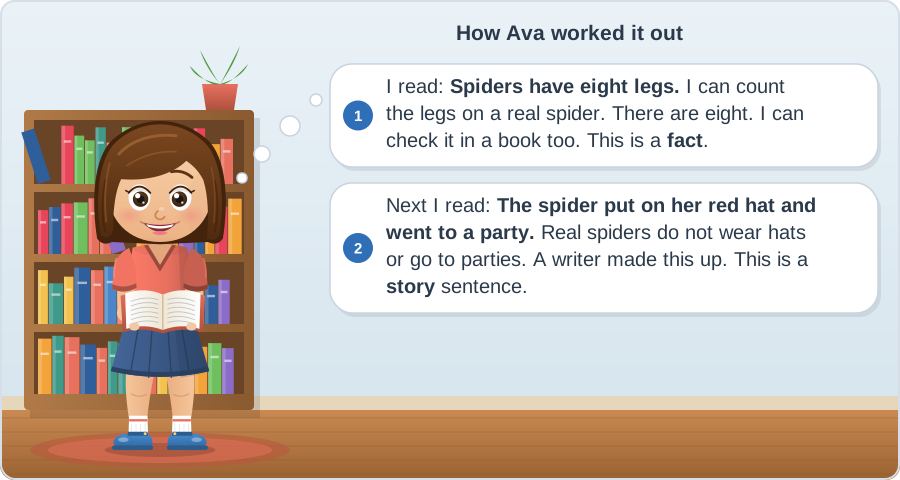
See How It’s Done
Now Try It
1. “Frogs can jump.” Is it a fact or a story?
Hint: Could you see a real frog do this?
2. “The frog said, ‘I am the king of the pond!’” Is it a fact or a story?
Hint: Can a real frog talk?
Time To Practise
Name: ______________________
1. Fact or story?
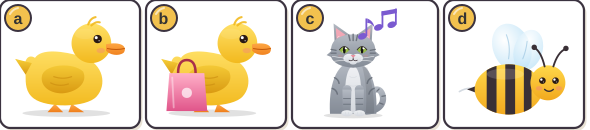
Tick one box for each sentence.
a) Ducks can swim. ☐ fact ☐ story
b) The duck went to the shop to get a bun. ☐ fact ☐ story
c) The cat sang a song to the moon. ☐ fact ☐ story
d) Bees make honey. ☐ fact ☐ story
2. Read two texts.
Text A: Snails
Snails have a hard shell on their back. They move slowly on one flat foot. Snails like wet, shady places. They come out after it rains. Snails eat leaves and plants.
Text B: Sid the Snail
Once upon a time, Sid the snail put on his best blue hat. He went to a party in the garden. He danced with a ladybird until the moon came up.
a) Which text gives facts? Text A Text B
b) Write one fact about snails from the text.
______________________________________________
c) How do you know Text B is a story? Write two sentences.
______________________________________________
______________________________________________
3. Write a fact and a story sentence.
Pick an animal. Write one fact about it. Then write one story sentence about it.
Word bank: legs | wings | fur | shell | swim | fly
Fact: ______________________________________________
Story: ______________________________________________
Reflect
Think about these questions. Talk about them with someone at home or at school.
1. Go back to the Wonder question: “How can we tell if something is true?” What do you think now?
2. I was a thinker today when I ______________________________.
A thinker thinks carefully to work things out. For example: I was a thinker today when I worked out if a sentence was a fact or a story.
Take action: Find one animal fact in a book. Check it in a second book or with an adult.
Next Steps
If this was easy, try: Pick a story book and a fact book about the same animal. Find two facts in the fact book and two made-up things in the story book.
If this was hard, go back to: See How It’s Done. Sort sentences about one animal only, such as a cat. Ask each time: Could a real cat do this?
Notes for Parents and Teachers
Show notes for parents and teachers
These notes cover this lesson only. How every lesson runs is explained in How to Use This Material.
Let’s Learn
Point to each card as you explain it.
See How It’s Done
Read each sentence aloud as you go through Ava’s thoughts.
Answer Key
Reveal Answers
Now Try It
1. fact
2. story
1. Fact or story?
a) fact
b) story
c) story
d) fact
Look for: a reason for each story sentence, such as “Ducks do not go to shops.”
2. Read two texts
a) Text A
b) Any fact from Text A, for example: Snails have a hard shell on their back. Snails eat leaves and plants.
c) Sample answer: Snails do not wear hats or go to parties. It starts with “Once upon a time”.
Look for: two sentences, each with a reason. Accept any clue from the text.
3. Write a fact and a story sentence
Sample answer: Fact: Birds have wings. Story: The bird baked a cake for her friends.
Look for: a fact that is true and could be checked, and a story sentence that shows something a real animal cannot do.
Reflect
2. Any real moment from the lesson that shows the learner was a thinker. Examples: “I was a thinker today when I worked out if a sentence was a fact or a story.” “I was a thinker today when I explained how I knew a text was a fact text.”
Lesson 4.2: Read an Animal Fact Page
Reading | About 20 minutes
Term 2 | Level 2
Goal
“I can find facts on a fact page by using the title and headings.”
Words to know
fact page, title, heading, fact
Wonder
Think about this question before you start. Say your ideas. You will come back to it at the end of the lesson.
What does a frog need to live?
Let’s Learn
A fact page gives true information about something real.
The title tells us what the whole page is about. Headings tell us what each part is about. Pictures show us what the words mean.
To find a fact, read the question. Then use the headings to find the right part of the page.
See How It’s Done
Use the frog fact page in Time To Practise.

Now Try It
Use the frog fact page in Time To Practise.
1. Where do frogs live?
Hint: Which heading has the word “live” in it?
2. What does a frog use to catch a bug?
Hint: Look under “What frogs eat”.
Time To Practise
Name: ______________________
Read with an adult.
Frogs
What frogs look like
Frogs are small animals. They have long back legs and wet, smooth skin. Frogs use their back legs to jump and swim.
Where frogs live
Frogs live near ponds, lakes and wet places. They need water to keep their skin wet.
What frogs eat
Frogs eat bugs. A frog catches a bug with its long, sticky tongue.
How frogs grow
A frog starts life as an egg in the water. The egg hatches into a tadpole. The tadpole grows legs and turns into a frog.
1. True or not true?
Tick one box for each sentence.
a) Frogs have long back legs. ☐ true ☐ not true
b) Frogs have dry, rough skin. ☐ true ☐ not true
c) Frogs eat cake. ☐ true ☐ not true
d) Tadpoles hatch from eggs. ☐ true ☐ not true
2. Find three facts.
Write three facts about frogs. Use a different heading for each one.
Word bank: pond | bugs | tongue | tadpole | jump
1. ______________________________________________
2. ______________________________________________
3. ______________________________________________
3. Think about it.
a) Put the pictures in order to show how a frog grows. 1st ____ 2nd ____ 3rd ____
b) Why do you think frogs live near water? Use the fact page to help. Write two sentences.
______________________________________________
______________________________________________
Reflect
Think about these questions. Talk about them with someone at home or at school.
1. Go back to the Wonder question: “What does a frog need to live?” What do you think now?
2. I was knowledgeable today when I ______________________________.
Being knowledgeable means knowing things and using what you know. For example: I was knowledgeable today when I used the headings to find facts about frogs.
Take action: Make a fact card about an animal you can see near your home.
Next Steps
If this was easy, try: Find a fact book about another animal. Use the headings to find three facts and tell them to someone at home.
If this was hard, go back to: See How It’s Done. Read one part of the fact page at a time, and ask one question about that part only.
Notes for Parents and Teachers
Show notes for parents and teachers
These notes cover this lesson only. How every lesson runs is explained in How to Use This Material.
Let’s Learn
Point to the title, a heading and the picture.
See How It’s Done
Point to each heading on the frog fact page as you go through Leo’s thoughts.
Answer Key
Reveal Answers
Now Try It
1. Frogs live near ponds, lakes and wet places.
2. its long, sticky tongue
1. True or not true?
a) true
b) not true (frogs have wet, smooth skin)
c) not true (frogs eat bugs)
d) true
2. Find three facts
Sample answer: Frogs have long back legs. Frogs eat bugs. A tadpole turns into a frog.
Look for: three different facts, each from a different part of the page, written as sentences.
3. Think about it
a) 1st C (eggs), 2nd A (tadpole), 3rd B (frog)
b) Sample answer: Frogs need water to keep their skin wet. Their eggs and tadpoles grow in the water.
Look for: two reasons that come from the text. The second reason joins two facts together, which is a simple inference.
Reflect
2. Any real moment from the lesson that shows the learner was knowledgeable. Examples: “I was knowledgeable today when I used the headings to find facts about frogs.” “I was knowledgeable today when I learned a new fact about frogs and shared it.”
For Teachers: IB Details
Show IB and curriculum details
IB theme: Sharing the planet. This theme is about how we share the planet with other people and other living things: rights and responsibilities, living together fairly, and caring for nature.
Central idea: Animals share our world, and people can learn about them and care for them.
Each lesson also matches the national curriculum for England (Year 1) and the US Common Core (Grade 1). The Grade 1 Curriculum Map lists the full standards for every lesson.
← Back to Lesson 4 – Animals Around Us | Lessons – Index
© 2026 Firefly Ed. All rights reserved. This page may be printed for personal, home and classroom use. It may not be sold, shared online or reproduced for commercial use without written permission. edfirefly.com


Share your thoughts or ask something..