
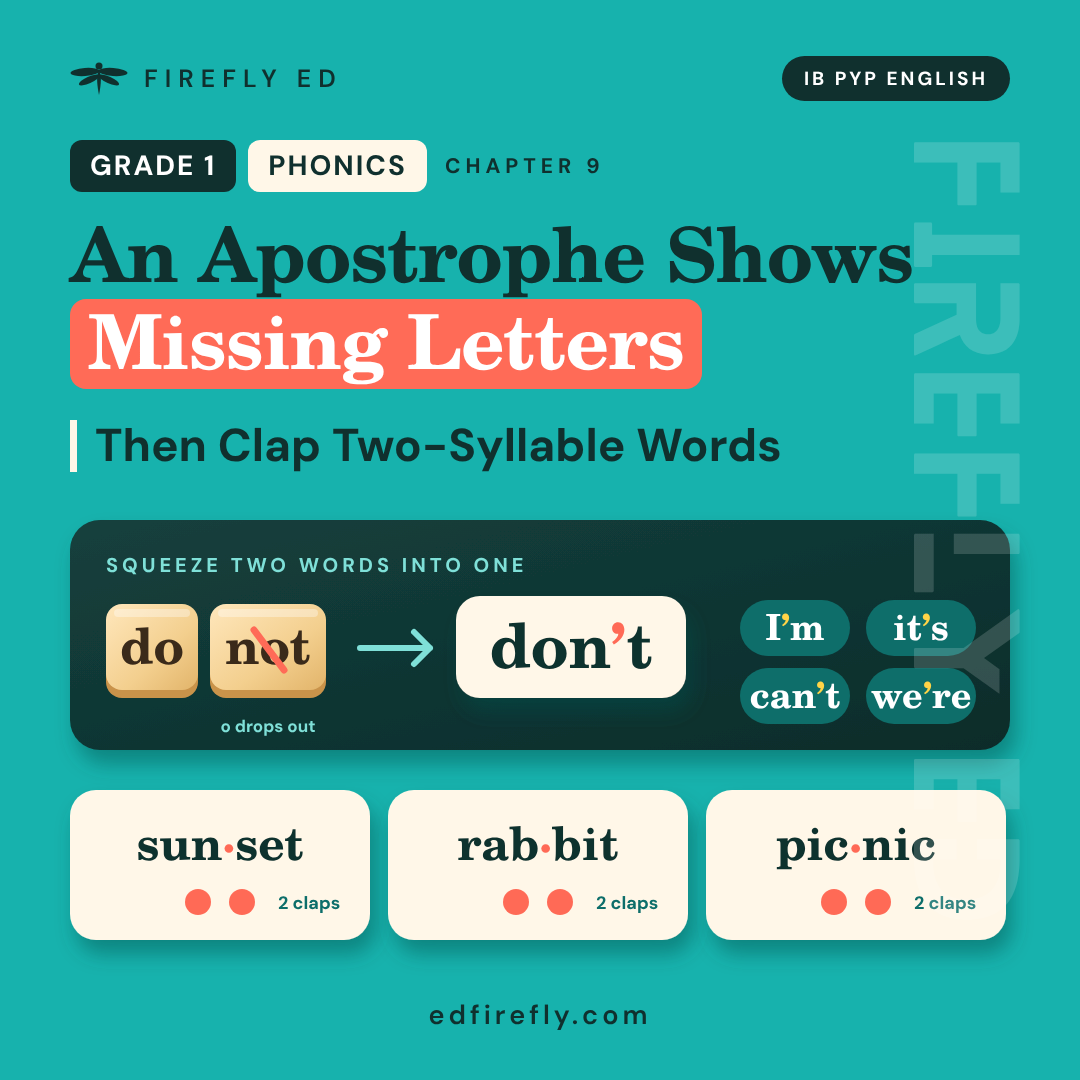
Term 3 | Level 3 | Phonics focus: contractions, two-syllable words, tricky word review
Lesson 9 – Our Community | Lessons – Index
Lessons
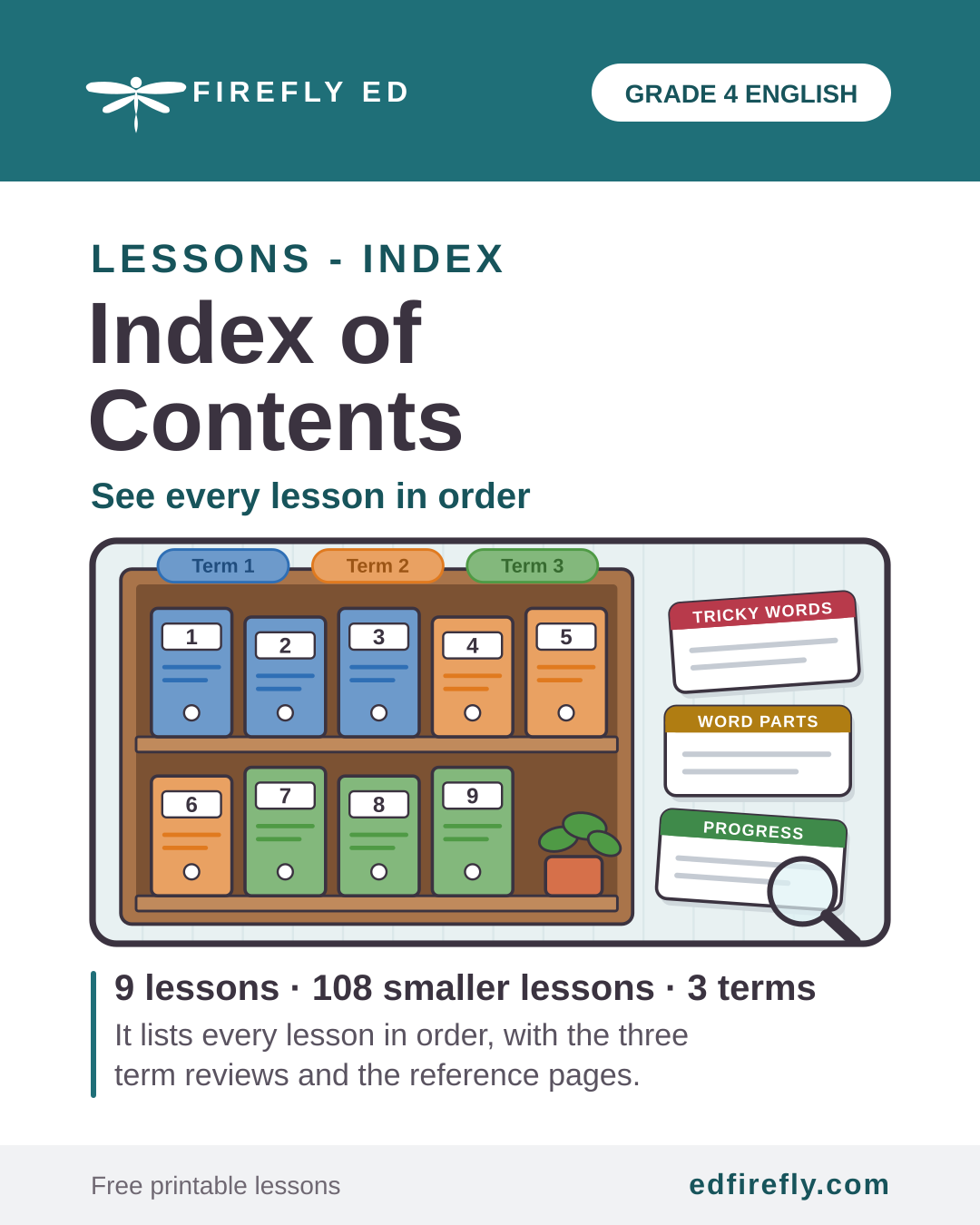
This page has the three phonics lessons in Lesson 9, Our Community: Lessons 9.9, 9.10 and 9.11. The Lesson 9 page has the Lesson 9 overview, the Lesson 9 review and the PDF download.
Select a lesson to go straight to it. Each lesson ends with a link back to the top of the page.
- Lesson 9.9: Contractions: I’m, can’t, don’t
- Lesson 9.10: Two-Syllable Words
- Lesson 9.11: Tricky Words: Year Review
Lesson 9.9: Contractions: I’m, can’t, don’t
Phonics | About 20 minutes
Term 3 | Level 3
Goal
“I can join two words into a contraction and put the apostrophe in the right place.”
Words to know
contraction, apostrophe, missing letter
Wonder
Think about this question before you start. Say your ideas. You will come back to it at the end of the lesson.
How can two words become one shorter word?
Let’s Learn
A contraction is two words squeezed into one shorter word. We use contractions all the time when we speak.
When we squeeze the words together, some letters drop out. An apostrophe ( ‘ ) goes in the place where the letters were. It looks like a floating comma.
Common contractions: I’m (I am), don’t (do not), can’t (cannot), it’s (it is), didn’t (did not), I’ll (I will), we’re (we are).
See How It’s Done
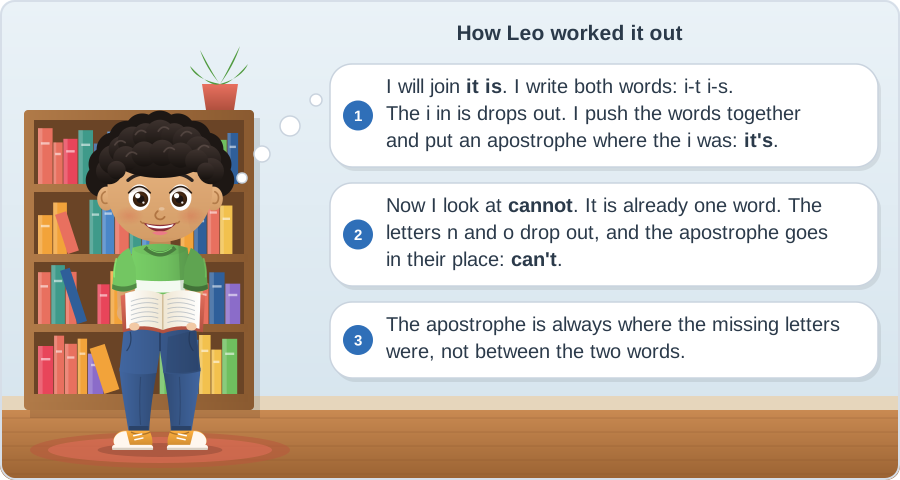
Now Try It
1. Join did not into one word. Which letter drops out?
Hint: It is the same pattern as do not and don’t.
2. What two words make we’re?
Hint: The apostrophe replaces the letter a.
Time To Practise
Name: ______________________
1. Match the pairs.
Write the letter of the contraction next to the two words.
1. I will ____ 2. do not ____ 3. it is ____ 4. I am ____ 5. cannot ____
a) can’t b) it’s c) I’ll d) don’t e) I’m
2. Write the contraction.
a) did not → ______________ b) we are → ______________
c) I am → ______________ d) it is → ______________
Circle the two mistakes: do’nt don’t dont Which one is right? ______________
3. Talk like a helper.
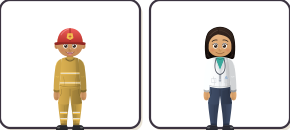
Rewrite each sentence with contractions.
a) “I am a firefighter, and I will keep you safe.”
______________________________________________
b) “Do not worry. It is only a small cut,” said the doctor.
______________________________________________
c) Write your own sentence that a helper might say. Use two contractions.
______________________________________________
Reflect
Think about these questions. Talk about them with someone at home or at school.
1. Go back to the Wonder question: “How can two words become one shorter word?” What do you think now?
2. I was knowledgeable today when I ______________________________.
Being knowledgeable means knowing things and using what you know. For example: I was knowledgeable today when I used contractions like I’m and can’t.
Take action: Listen for contractions when your family talks. Write down three you hear, such as I’m or don’t.
Next Steps
If this was easy, try: Read a storybook and find five contractions. Write each one with the two words it stands for.
If this was hard, go back to: See How It’s Done. Write I am and do not on cards. Cut out the letter that drops out and add an apostrophe.
Notes for Parents and Teachers
Show notes for parents and teachers
These notes cover this lesson only. How every lesson runs is explained in How to Use This Material.
Let’s Learn
Point to the apostrophe and say which letter it replaces.
See How It’s Done
Write both words on paper, cross out the letters that drop out, and write the contraction, as you go through Leo’s thoughts.
Answer Key
Reveal Answers
Now Try It
1. didn’t. The o drops out.
2. we are
1. Match the pairs
1. c
2. d
3. b
4. e
5. a
2. Write the contraction
a) didn’t b) we’re c) I’m d) it’s
Right: don’t. The mistakes are do’nt (apostrophe in the wrong place) and dont (no apostrophe).
3. Talk like a helper
a) “I’m a firefighter, and I’ll keep you safe.”
b) “Don’t worry. It’s only a small cut,” said the doctor.
c) Sample answer: “Don’t run on the road. I’m here to help you cross.”
Look for: the apostrophe placed where the letters are missing; I’m and I’ll with a capital I.
Reflect
2. Any real moment from the lesson that shows the learner was knowledgeable. Examples: “I was knowledgeable today when I used contractions like I’m and can’t.” “I was knowledgeable today when I knew which two words make each contraction.”
Lesson 9.10: Two-Syllable Words
Phonics | About 20 minutes
Term 3 | Level 3
Goal
“I can clap, split and read words with two syllables, such as rabbit, picnic and sunset.”
Words to know
syllable, beat, split, two-syllable word
Wonder
Think about this question before you start. Say your ideas. You will come back to it at the end of the lesson.
How can clapping help us read long words?
Let’s Learn
A syllable is a beat in a word. We can clap the beats: cat has one beat, rab-bit has two beats.
To read a long word, split it into its syllables. Read each part, then put them together. Each syllable has one vowel sound.
When a word has two consonants in the middle, we often split between them: rab | bit, pic | nic, sun | set, bas | ket.
See How It’s Done
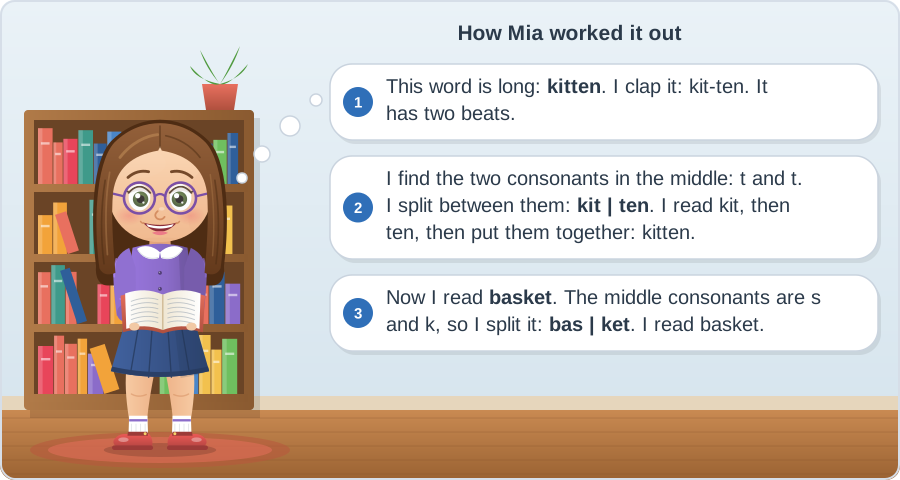
Now Try It
1. Clap magnet. How many beats? Where do you split it?
Hint: Find the two consonants in the middle: g and n.
2. Split pencil into two parts and read each one.
Hint: The middle consonants are n and c.
Time To Practise
Name: ______________________
1. Clap and count.
Clap each word. Write 1 or 2 for the number of beats.
dog ____ rabbit ____ sunset ____ bus ____ picnic ____ ship ____ kitten ____ hat ____
2. Join the parts.
Listen as an adult names each picture.
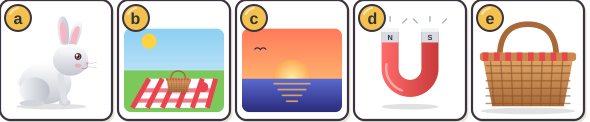
Join a first part to a second part to name each picture.
First parts: mag | rab | bas | sun | pic
Second parts: set | ket | nic | bit | net
a) ______________ b) ______________ c) ______________ d) ______________ e) ______________
3. A picnic in the park.
Read:
On Sunday, we had a picnic in the park. Mum packed a basket with muffins and a big pot of jam. My sister brought her pet rabbit in a basket too. After lunch, we played tennis until the sunset turned the sky pink.
a) Find six two-syllable words in the text. Split each one with a line, like this: pic | nic.
______________________________________________
______________________________________________
b) Write a sentence about your community with two two-syllable words.
______________________________________________
Reflect
Think about these questions. Talk about them with someone at home or at school.
1. Go back to the Wonder question: “How can clapping help us read long words?” What do you think now?
2. I was a risk-taker today when I ______________________________.
A risk-taker tries something new, even when it feels hard. For example: I was a risk-taker today when I tried to read new two-syllable words.
Take action: Clap the names of five people in your community, such as your teacher, the doctor and the baker.
Next Steps
If this was easy, try: Make a list of ten two-syllable words you can see at home, such as window, carpet and kitchen. Split each one.
If this was hard, go back to: See How It’s Done. Clap one-syllable and two-syllable words until you can hear the difference, then split rabbit and picnic with a pencil line.
Notes for Parents and Teachers
Show notes for parents and teachers
These notes cover this lesson only. How every lesson runs is explained in How to Use This Material.
Let’s Learn
Clap each word with the learner.
See How It’s Done
Clap each word, and cover one half with your finger, as you go through Mia’s thoughts.
Time To Practise
- Task 2: Point to each picture and name it first: ra…, pi…, su…, ma…, ba… (the full words are in the Answer Key).
Answer Key
Reveal Answers
Now Try It
1. Two beats: mag | net
2. pen | cil
1. Clap and count
dog 1, rabbit 2, sunset 2, bus 1, picnic 2, ship 1, kitten 2, hat 1
2. Join the parts
a) rabbit b) picnic c) sunset d) magnet e) basket
3. A picnic in the park
a) Any six of: Sun | day, pic | nic, bas | ket, muf | fins, sis | ter, rab | bit, ten | nis, un | til, sun | set, af | ter.
b) Sample answer: The doctor has a basket of muffins for the picnic.
Look for: a split between the two middle consonants. Accept any split that keeps one vowel sound in each part.
Reflect
2. Any real moment from the lesson that shows the learner was a risk-taker. Examples: “I was a risk-taker today when I tried to read new two-syllable words.” “I was a risk-taker today when I clapped the beats in long words.”
Lesson 9.11: Tricky Words: Year Review
Phonics | About 20 minutes
Term 3 | Level 3
Goal
“I can read and spell the tricky words from this year, such as friend, school and because.”
Words to know
tricky word, sight word, Look, Say, Cover, Write, Check
Wonder
Think about this question before you start. Say your ideas. You will come back to it at the end of the lesson.
Which tricky words can I now read and spell?
Let’s Learn
Tricky words do not follow the sound rules we know, or they have a tricky part. We cannot sound them out, so we learn them by sight.
This year you learned tricky words like the, said and was. Now we add some longer ones, like friend, school and because.
To learn a tricky word, use the five steps: Look, Say, Cover, Write, Check. Find the tricky part and look at it closely.
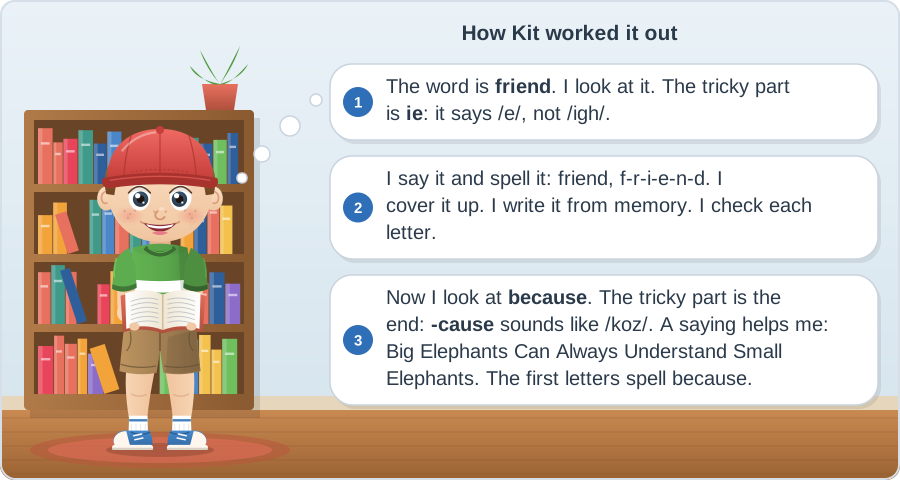
See How It’s Done
Now Try It
1. Look at the word school. Which part is tricky?
Hint: What sound does the ch make here?
2. Look at the word said. Which letters make the /e/ sound?
Hint: It is not e. Look at the middle.
Time To Practise
Name: ______________________
1. Read the tricky words.
Read each word to an adult. Tick every word you read correctly.
| ☐ the | ☐ said | ☐ was | ☐ went |
| ☐ saw | ☐ made | ☐ friend | ☐ school |
| ☐ because | ☐ people | ☐ they | ☐ were |
| ☐ there | ☐ come | ☐ some | ☐ once |
I read ______ out of 16 words.
2. Fill the gap.
Word bank: because | friend | people | school | they | once
a) My best ______________ lives next door to me.
b) We walk to ______________ every morning.
c) Many ______________ help in our community.
d) I wore my coat ______________ it was cold.
e) ______________ upon a time, there was a kind baker.
f) The firefighters said ______________ would come quickly.
3. Look, Say, Cover, Write, Check.
Choose four words you found hard in Task 1. Fold the page so you cannot see the first column when you write.
| Look and say | Write | Check (✓ or ✗) | Write again |
|---|---|---|---|
| ______________ | ______________ | ____ | ______________ |
| ______________ | ______________ | ____ | ______________ |
| ______________ | ______________ | ____ | ______________ |
| ______________ | ______________ | ____ | ______________ |
Write two sentences about your school or your friends. Use three tricky words.
______________________________________________
______________________________________________
Reflect
Think about these questions. Talk about them with someone at home or at school.
1. Go back to the Wonder question: “Which tricky words can I now read and spell?” What do you think now?
2. I was reflective today when I ______________________________.
Being reflective means looking back at your work and thinking how to make it better. For example: I was reflective today when I looked back at all the tricky words I learned this year.
Take action: Make a tricky word card game and play it with your family.
Next Steps
If this was easy, try: Make a tricky word memory game with pairs of cards and play it with your family.
If this was hard, go back to: Task 1. Choose just three words you did not read correctly and practise them with Look, Say, Cover, Write, Check each day.
Notes for Parents and Teachers
Show notes for parents and teachers
These notes cover this lesson only. How every lesson runs is explained in How to Use This Material.
Let’s Learn
Act out each of the five steps.
See How It’s Done
Write each word large on paper and underline the tricky part as you go through Kit’s thoughts.
Answer Key
Reveal Answers
Now Try It
1. The ch says /k/, not /ch/.
2. ai
1. Read the tricky words
Record the score. Words not read correctly go into Task 3.
2. Fill the gap
a) friend
b) school
c) people
d) because
e) Once
f) they
3. Look, Say, Cover, Write, Check
Look for: the learner covers the word before writing, then checks letter by letter and fixes mistakes in the last column.
Sample sentences: My friend and I went to school. We were happy because it was sunny.
Note: keep a list of the words the learner still finds hard, and practise two a day for the next week.
Reflect
2. Any real moment from the lesson that shows the learner was reflective. Examples: “I was reflective today when I looked back at all the tricky words I learned this year.” “I was reflective today when I found the tricky words I need to practise.”
For Teachers: IB Details
Show IB and curriculum details
IB theme: How we organize ourselves. It covers the communities we belong to, the jobs people do, how people work together, and how messages and ideas are shared.
Central idea: People in a community have different roles, and they share ideas and messages to help one another.
| Lesson | Title | Strand | Key concept |
|---|---|---|---|
| 9.9 | Contractions: I’m, can’t, don’t | Reading and spelling | Function |
| 9.10 | Two-Syllable Words | Reading and spelling | Function |
| 9.11 | Tricky Words: Year Review | Reading and spelling | Responsibility |
Each lesson also matches the national curriculum for England (Year 1) and the US Common Core (Grade 1). The Grade 1 Curriculum Map lists the full standards for every lesson.
← Back to Lesson 9 – Our Community | Lessons – Index
© 2026 Firefly Ed. All rights reserved. This page may be printed for personal, home and classroom use. It may not be sold, shared online or reproduced for commercial use without written permission. edfirefly.com


Share your thoughts or ask something..