
Term 3 | Level 3 | Phonics focus: y, ea, soft c and g, wh, ph, -er, -est, un-
Lesson 8 – Friends and Feelings | Lessons – Index
Lessons
This page has the two reading lessons in Lesson 8, Friends and Feelings: Lessons 8.1 and 8.2. The Lesson 8 page has the Lesson 8 overview, the Lesson 8 review and the PDF download.
Select a lesson to go straight to it. Each lesson ends with a link back to the top of the page.
Lesson 8.1: Why Did They Do That?
Reading | About 20 minutes
Term 3 | Level 3
Goal
“I can read a story and explain why a character acted the way they did, using clues from the text.”
Words to know
reason, clue, because, character
Wonder
Think about this question before you start. Say your ideas. You will come back to it at the end of the lesson.
Why do people act the way they do?
Let’s Learn
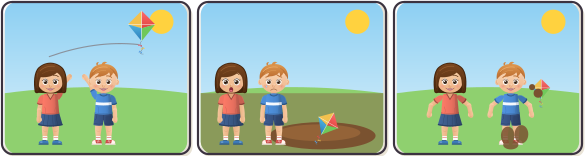
Characters in stories do things for a reason. The reason is why they act the way they do.
Sometimes the story tells us the reason. Often it does not, and we must work it out from clues: what the character says, what they do, and how they look or feel.
When we explain a reason, we use the word because: Ava gave Sam the string because …
See How It’s Done
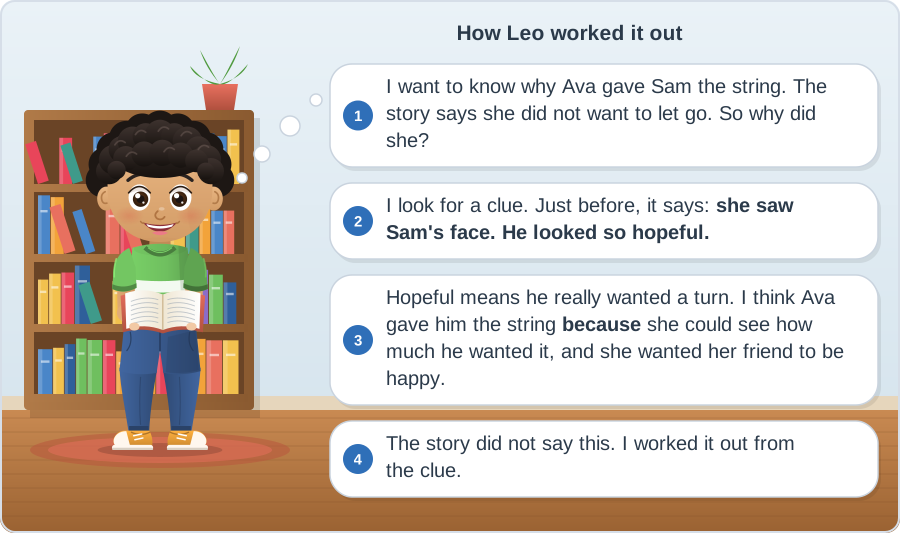
Look at the story in Time To Practise.
Now Try It
1. Why did Sam’s face go red?
Hint: What had just happened to Ava’s new kite? How would you feel?
2. Why did Ava laugh instead of getting cross?
Hint: What did she see when she looked at Sam? What did she call him?
Time To Practise
Name: ______________________
Read the story on your own. Ask an adult if you get stuck.
The Muddy Kite
Ava and Sam were best friends. On Saturday, they took Ava’s new red kite to the park. The wind was strong, and the kite flew up high above the trees.
“Can I hold it?” asked Sam. Ava did not want to let go. Then she saw Sam’s face. He looked so hopeful. She passed him the string.
Just then, a big gust of wind tugged at the kite. Sam held on tight, but the string slipped out of his hands. The kite floated down and landed in a muddy pond.
Sam’s face went red. He ran to the edge of the pond and waded in up to his knees. He grabbed the kite and carried it back. It was dripping with mud.
“I am so sorry,” said Sam. “I will help you clean it.”
Ava looked at her kite. Then she looked at Sam’s wet, muddy legs, and she began to laugh. “You look like a swamp monster!” she said.
Sam laughed too. They carried the kite home and washed it together.
1. Match the action to the reason.
Write the letter of the reason next to each action.
1. Sam waded into the pond. ____
2. The kite fell into the pond. ____
3. Sam said, “I will help you clean it.” ____
4. Ava and Sam laughed. ____
a) because Sam looked funny, like a swamp monster
b) because he felt bad and wanted to put things right
c) because he wanted to get the kite back for Ava
d) because the wind tugged it and the string slipped
2. Explain why.
a) Ava did not want to let go of the string. Why do you think she felt that way? Write two sentences.
______________________________________________
______________________________________________
b) Why did Sam say sorry, even though the wind pulled the kite? Write two or three sentences.
______________________________________________
______________________________________________
______________________________________________
3. What do you think?
Was Ava a good friend in this story? Write four to six sentences. Give reasons from the story, using because.
______________________________________________
______________________________________________
______________________________________________
______________________________________________
______________________________________________
Reflect
Think about these questions. Talk about them with someone at home or at school.
1. Go back to the Wonder question: “Why do people act the way they do?” What do you think now?
2. I was a thinker today when I ______________________________.
A thinker thinks carefully to work things out. For example: I was a thinker today when I worked out why a character did something.
Take action: Next time a friend or family member does something kind, ask them why they did it.
Next Steps
If this was easy, try: Read a new story with an adult. Choose one thing a character does and explain why, using a clue and the word because.
If this was hard, go back to: See How It’s Done. Read just the first three parts of the story. Find one clue about how Ava feels and one about how Sam feels.
Notes for Parents and Teachers
Show notes for parents and teachers
These notes cover this lesson only. How every lesson runs is explained in How to Use This Material.
Let’s Learn
Point to each picture and ask how the children feel.
See How It’s Done
Point to the clue in the story as you go through Leo’s thoughts.
Answer Key
Reveal Answers
Now Try It
1. Sample answer: Sam felt embarrassed and worried because he lost Ava’s new kite in the pond.
2. Sample answer: Ava laughed because Sam looked funny with muddy legs, like a swamp monster. She could see he was trying hard to help.
1. Match the action to the reason
1. c
2. d
3. b
4. a
2. Explain why
a) Sample answer: The kite was new, and it was hers. She was worried that Sam might lose it.
b) Sample answer: Sam was holding the string when it slipped. He felt it was his job to keep the kite safe. Saying sorry showed he cared about Ava’s feelings.
Look for: reasons that use clues from the story, and the word because.
3. What do you think?
Sample answer: Yes, I think Ava was a good friend. She let Sam hold her new kite because she saw how much he wanted a turn. When the kite fell in the pond, she did not shout at Sam. She laughed and made a joke, so he did not feel so bad. They cleaned the kite together. A good friend forgives mistakes.
Look for: a clear opinion; at least two reasons from the story; four to six sentences. Accept a different opinion if it is backed up with clues, for example that Ava should have said “It is OK” before laughing.
Words to watch: hopeful, gust, floated, waded, dripping, swamp and monster. Read them with the learner first if needed.
Reflect
2. Any real moment from the lesson that shows the learner was a thinker. Examples: “I was a thinker today when I worked out why a character did something.” “I was a thinker today when I used clues from the story to explain a reason.”
Lesson 8.2: Two Characters, Two Ways
Reading | About 20 minutes
Term 3 | Level 3
Goal
“I can compare how two characters feel about the same event, and explain why.”
Words to know
compare, character, feeling, clue, change
Wonder
Think about this question before you start. Say your ideas. You will come back to it at the end of the lesson.
Can two friends feel differently about the same thing?
Let’s Learn
Two characters can feel very differently about the same event. One might feel excited while the other feels worried.
To compare them, we look for clues about each character: what they say, what they do and what has happened to them before.
Feelings can also change during a story. We look at how a character feels at the beginning and at the end, and ask what made it change.
See How It’s Done
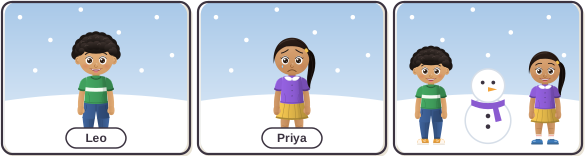
Look at the story in Time To Practise.

Now Try It
1. How did Priya feel when she first saw the snow? What did she do?
Hint: Read the second part of the story. What did she do with her blanket?
2. Why did Priya feel that way?
Hint: What happened to her last winter?
Time To Practise
Name: ______________________
Read the story on your own. Ask an adult if you get stuck.
Snow Day
When Leo woke up, the world outside was white. “Snow!” he shouted. He jumped out of bed and pressed his nose against the cold window. He could not wait to build a snowman.
His best friend, Priya, lived next door. When she saw the snow, she pulled the blanket over her head. Priya did not like the cold. Her fingers always hurt, and last winter she had slipped on the ice and hurt her knee.
Leo knocked on Priya’s door. “Come and play!” he called. Priya frowned. “It is too cold,” she said.
Leo thought for a moment. Then he ran home and came back with his thickest gloves. “You can wear these,” he said. “And we can stay on the grass, away from the ice.”
Priya smiled a little. She put on the gloves. Soon the two friends were rolling a giant snowball across the garden. When they finished, Priya gave the snowman her scarf.
“It is not so bad,” she said, “with a good friend.”
1. Compare the two friends.
Fill in the chart. Write a feeling word and one clue from the story.
| Leo | Priya | |
|---|---|---|
| Feeling at the start | ____________________ | ____________________ |
| Clue | ____________________ | ____________________ |
| Feeling at the end | ____________________ | ____________________ |
2. Why did Priya change?
a) What two things did Leo do to help Priya?
______________________________________________
______________________________________________
b) Priya gave the snowman her scarf. What does this tell you about how she felt by then?
______________________________________________
3. What do you think?
Are you more like Leo or more like Priya on a snowy or rainy day? Write four to six sentences. Say how you feel and why.
______________________________________________
______________________________________________
______________________________________________
______________________________________________
______________________________________________
Reflect
Think about these questions. Talk about them with someone at home or at school.
1. Go back to the Wonder question: “Can two friends feel differently about the same thing?” What do you think now?
2. I was open-minded today when I ______________________________.
Being open-minded means listening to other ideas and other ways of doing things. For example: I was open-minded today when I understood why Leo and Priya felt different about the snow.
Take action: Ask a family member how they felt about a day you shared. Was it the same as how you felt?
Next Steps
If this was easy, try: Read a story with two main characters. Make a chart to compare how each one feels at the start and at the end.
If this was hard, go back to: See How It’s Done. Read the first two parts of the story. Underline Leo’s clues in one colour and Priya’s clues in another.
Notes for Parents and Teachers
Show notes for parents and teachers
These notes cover this lesson only. How every lesson runs is explained in How to Use This Material.
Let’s Learn
Point to each picture and ask how each child feels.
See How It’s Done
Point to each clue in the story as you go through Mia’s thoughts.
Answer Key
Reveal Answers
Now Try It
1. Priya felt unhappy or worried. She pulled the blanket over her head.
2. She did not like the cold. Her fingers hurt, and she slipped on the ice last winter and hurt her knee.
1. Compare the two friends
Leo, start: excited or happy. Clue: he shouted “Snow!” / jumped out of bed / could not wait.
Priya, start: unhappy, worried or grumpy. Clue: she pulled the blanket over her head / she frowned / she said it was too cold.
Leo, end: happy. Priya, end: happy or glad.
2. Why did Priya change?
a) Leo gave her his thickest gloves. He said they could stay on the grass, away from the ice.
b) Sample answer: She was happy and having fun. She wanted to share, and she did not mind the cold so much.
Look for: in part a, both actions, each linked to one of Priya’s worries (cold fingers, ice).
3. What do you think?
Sample answer: I am more like Leo. I love snowy days. I like to make snow angels and throw snowballs. My fingers get cold, but I wear big gloves. After, I have a hot drink inside. Snow days are the best days.
Look for: a clear choice; reasons linked to the learner’s own experience; four to six sentences. There is no wrong answer.
Reflect
2. Any real moment from the lesson that shows the learner was open-minded. Examples: “I was open-minded today when I understood why Leo and Priya felt different about the snow.” “I was open-minded today when I thought about how someone else might feel.”
For Teachers: IB Details
Show IB and curriculum details
IB theme: Who we are. It covers our feelings, our friendships and relationships, and how we understand and care for other people.
Central idea: Friendships grow when we understand our own feelings and the feelings of others.
| Lesson | Title | Strand | Key concept |
|---|---|---|---|
| 8.1 | Why Did They Do That? | Reading | Causation |
| 8.2 | Two Characters, Two Ways | Reading | Perspective |
Each lesson also matches the national curriculum for England (Year 1) and the US Common Core (Grade 1). The Grade 1 Curriculum Map lists the full standards for every lesson.
← Back to Lesson 8 – Friends and Feelings | Lessons – Index
© 2026 Firefly Ed. All rights reserved. This page may be printed for personal, home and classroom use. It may not be sold, shared online or reproduced for commercial use without written permission. edfirefly.com


Share your thoughts or ask something..