
Term 2 | Level 2 | Phonics focus: igh/ie, ar, or, er/ir/ur, compound words
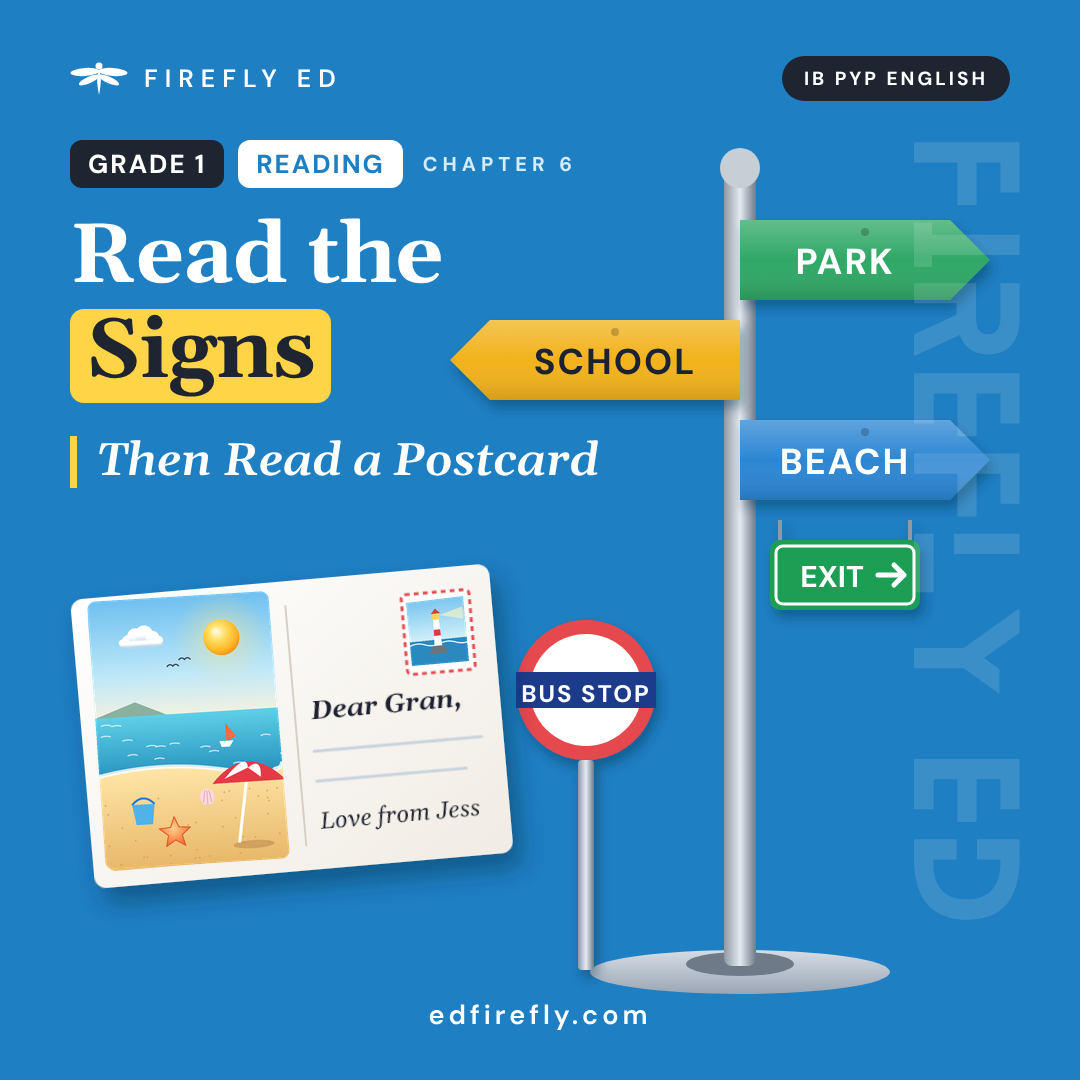
Lesson 6 – Signs, Maps and Journeys | Lessons – Index
Lessons
This page has the two reading lessons in Lesson 6, Signs, Maps and Journeys: Lessons 6.1 and 6.2. The Lesson 6 page has the Lesson 6 overview, the Lesson 6 review and the PDF download.
Select a lesson to go straight to it. Each lesson ends with a link back to the top of the page.
Lesson 6.1: Signs Around Town
Reading | About 20 minutes
Term 2 | Level 2
Goal
“I can read common signs and say what they tell people to do.”
Words to know
sign, message, exit, arrow
Wonder
Think about this question before you start. Say your ideas. You will come back to it at the end of the lesson.
Why are there so many signs in a town?
Let’s Learn
A sign gives a short message. It tells people what to do or where to go.
Signs use only a few words. Many signs also use a colour, an arrow or a small picture.
To read a sign, read the words and look at where the sign is. Then ask: What does it tell me to do?
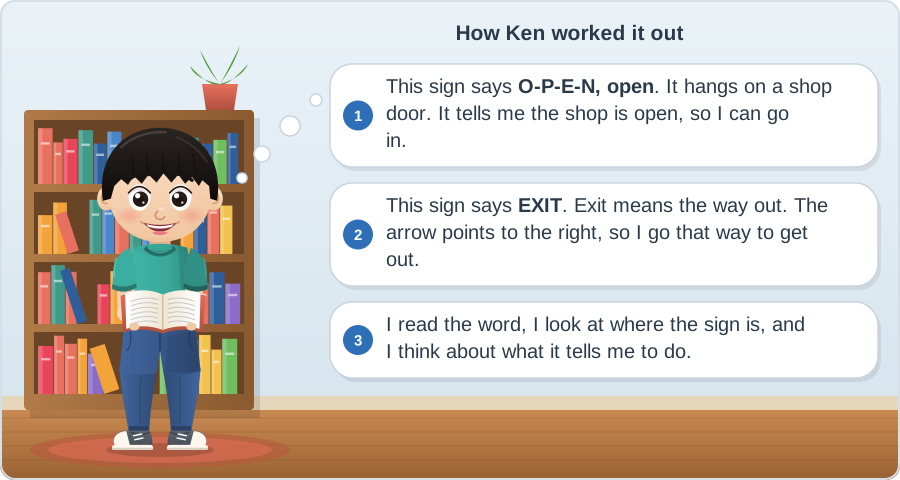
See How It’s Done
Now Try It
1. Read the first sign. What would you do next to this sign?
Hint: Look at the small picture in the circle. Read the two words under it.
2. The second sign is on a door. It says PUSH. How do you open the door?
Hint: Push means to move something away from you.
Time To Practise
Name: ______________________
1. What does the sign tell you?
Write the letter of the sign next to its meaning.
1. Wait here for the bus. ____
2. Use a soft voice. ____
3. The shop is not open now. ____
4. This is the way out. ____
2. Read and answer.
Read with an adult.
Sam and Gran Go to Town
Sam and Gran walk to town on Saturday. At the corner, they see a red sign that says STOP. They wait for the cars to stop, and then they cross the road.
Next, they go to the bakery. The sign on the door says OPEN, so they go in. Gran buys bread and two buns.
Then they wait at the bus stop. A red bus comes, and they get on. At the library, Sam sees a sign that says QUIET. He reads his book in a soft voice.
Word bank: bakery | library | corner | quiet
a) Which sign told Sam and Gran they could go into the bakery?
______________________________________________
b) What did Sam and Gran do at the STOP sign?
______________________________________________
c) Why did Sam read in a soft voice? Write two sentences.
______________________________________________
______________________________________________
3. Make a sign.
Make a sign for a room at home, such as your bedroom or the kitchen. Write the words and draw a small picture.
Where will your sign go? What does it tell people?
______________________________________________
Reflect
Think about these questions. Talk about them with someone at home or at school.
1. Go back to the Wonder question: “Why are there so many signs in a town?” What do you think now?
2. I was an inquirer today when I ______________________________.
An inquirer asks questions and finds things out. For example: I was an inquirer today when I asked what a sign means.
Take action: Go on a sign walk with an adult. Read three signs and say what each one tells people.
Next Steps
If this was easy, try: Go on a sign walk with an adult. Read five signs and write what each one tells people.
If this was hard, go back to: See How It’s Done. Read the OPEN and EXIT signs again. Then match two signs at a time in Task 1.
Notes for Parents and Teachers
Show notes for parents and teachers
These notes cover this lesson only. How every lesson runs is explained in How to Use This Material.
Let’s Learn
Point to each sign as you talk about it.
See How It’s Done
Read each sign aloud as you go through Ken’s thoughts.
Answer Key
Reveal Answers
Now Try It
1. Wait for the bus. The picture shows a bus, and the words say BUS STOP.
2. Push the door away from you.
1. What does the sign tell you?
1. c
2. b
3. d
4. a
2. Read and answer
a) The OPEN sign told them they could go in.
b) They waited for the cars to stop, and then they crossed the road.
c) Sample answer: Sam saw a sign that said QUIET. A library is a place where people read, so he used a soft voice.
Look for: in part c, the learner links the QUIET sign to what Sam did. The reason about the library is an inference, so accept any sensible idea, such as “so he did not disturb other people”.
3. Make a sign
Sample answer: A sign that says “Knock first” with a picture of a hand. It goes on my bedroom door. It tells people to knock before they come in.
Look for: a short message of one to three words, a picture that matches it, and a clear answer about what the sign tells people.
Words to watch: Saturday, bakery, library and quiet are not yet decodable at this level. Read them to the learner first, or point to the word bank.
Reflect
2. Any real moment from the lesson that shows the learner was an inquirer. Examples: “I was an inquirer today when I asked what a sign means.” “I was an inquirer today when I found out what the signs in town tell us.”
Lesson 6.2: A Postcard From a Trip
Reading | About 20 minutes
Term 2 | Level 2
Goal
“I can read a postcard and say where the writer went and what they saw.”
Words to know
postcard, greeting, message, stamp, trip
Wonder
Think about this question before you start. Say your ideas. You will come back to it at the end of the lesson.
What can a postcard tell us about a place?
Let’s Learn
A postcard is a card people send when they are on a trip.
One side has a picture of the place. The other side has a short message, the name of the person it is for, and a stamp.
A postcard message starts with a greeting, such as Dear Mum. It ends with the writer’s name, such as Love, Ben.
See How It’s Done

Now Try It
1. Who wrote this postcard, and who is it for?
Hint: Look at the first line and the last line.
2. What did Ali make?
Hint: Read the fourth line.
Time To Practise
Name: ______________________
1. Name the parts.
Word bank: stamp | name | picture | greeting
1. ______________ 2. ______________ 3. ______________ 4. ______________
2. Read Jess’s postcard.
Read with an adult.
Dear Nana,
We are at the beach for a week. Our tent is next to the sand. Every morning I swim in the sea with Dad. It is cold, but it is fun!
Yesterday we went on a boat trip. We saw seals on the rocks. Then we found a big starfish in a rock pool.
Tonight we will have fish and chips for dinner. I miss you. See you next Sunday.
Love from Jess
Word bank: beach | seals | starfish | tent
a) Where is Jess? at a farm at the beach in the hills
b) Where does Jess sleep on this trip?
______________________________________________
c) Which two sea animals did Jess see?
______________________________________________
3. Think about it.
a) Is Jess having a good time? How do you know? Write two sentences.
______________________________________________
______________________________________________
b) When will Jess see Nana again?
______________________________________________
Reflect
Think about these questions. Talk about them with someone at home or at school.
1. Go back to the Wonder question: “What can a postcard tell us about a place?” What do you think now?
2. I was open-minded today when I ______________________________.
Being open-minded means listening to other ideas and other ways of doing things. For example: I was open-minded today when I learned about someone else’s trip from a postcard.
Take action: Look at a postcard, a photo or a travel book with an adult. Say where it is and one thing you would like to see there.
Next Steps
If this was easy, try: Find a real postcard, or look at a travel photo with an adult. Say where it is and what the writer might tell a friend about it.
If this was hard, go back to: See How It’s Done. Read Ben’s short postcard again and find the greeting, the message and the name before reading Jess’s postcard.
Notes for Parents and Teachers
Show notes for parents and teachers
These notes cover this lesson only. How every lesson runs is explained in How to Use This Material.
Let’s Learn
Point to each part of the postcard.
See How It’s Done
Point to each part of Ben’s postcard as you go through Pam’s thoughts.
Answer Key
Reveal Answers
Now Try It
1. Ali wrote it. It is for Tom.
2. Ali made a snowman.
1. Name the parts
1. picture
2. greeting
3. stamp
4. name
2. Read Jess’s postcard
a) at the beach
b) Jess sleeps in a tent next to the sand.
c) Jess saw seals and a starfish.
3. Think about it
a) Sample answer: Yes, Jess is having a good time. She says swimming in the sea is fun, and she tells Nana about the seals and the starfish.
b) Next Sunday.
Look for: in part a, a clear yes or no and a reason taken from the postcard. “It is fun!” is the strongest clue. Some learners may notice “I miss you” and say Jess is a bit sad too. Accept this if they explain it.
Words to watch: beach, seals, starfish, yesterday and tonight. Read these to the learner first if needed.
Reflect
2. Any real moment from the lesson that shows the learner was open-minded. Examples: “I was open-minded today when I learned about someone else’s trip from a postcard.” “I was open-minded today when I listened to how other people go on holiday.”
For Teachers: IB Details
Show IB and curriculum details
IB theme: Where we are in place and time. It covers our homes and journeys, how we find our way, and how people explore and share the places they visit.
Central idea: People use signs, maps and stories to find their way and to share the places they visit.
| Lesson | Title | Strand | Key concept |
|---|---|---|---|
| 6.1 | Signs Around Town | Reading | Function |
| 6.2 | A Postcard From a Trip | Reading | Connection |
Each lesson also matches the national curriculum for England (Year 1) and the US Common Core (Grade 1). The Grade 1 Curriculum Map lists the full standards for every lesson.
← Back to Lesson 6 – Signs, Maps and Journeys | Lessons – Index
© 2026 Firefly Ed. All rights reserved. This page may be printed for personal, home and classroom use. It may not be sold, shared online or reproduced for commercial use without written permission. edfirefly.com


Share your thoughts or ask something..